Automation Solutions

For high-mix production, the best custom robotic automation cell is usually a flexible cell built around a defined part family, with quick-change tooling, recipe-driven programs and vision wherever fixtures would otherwise multiply. Dedicated cells still win on throughput for one part. Modular and collaborative cells fit when the mix keeps moving.
If you run high-mix, low-volume manufacturing, you already know the problem. A robot is great at doing one thing the same way thousands of times. Your floor needs it to do twelve things, a few hundred times each, and switch between them before lunch. Get the cell concept wrong and you end up with a robot that sits idle during changeovers, or an operator who spends the shift babysitting fixtures. Get it right and the cell handles your mix without anyone noticing (that's the goal, anyway). Here's how we think through the choice when we scope industrial automation cells for flexible production.
Most automation is designed around a single part. Fixed nests, hard-coded paths, one gripper. Simple and fast, right up until the second part number shows up.
High-mix work breaks that model in three places. First, changeover: every new part means new tooling, a new program and a first-article check, and if that takes an hour you lose the hour every time. Second, fixturing: a dedicated nest for each part variant adds cost, floor space and storage, and someone has to load the right one. Third, verification: more variants means more chances to run the wrong part, the wrong program or the wrong orientation, and that's where scrap comes from.
So the real question isn't whether a robot can handle your parts. It's how much of the variation you want the cell to absorb, and how much you're willing to manage by hand.
Most flexible production cells fall into five approaches.
One part (or a very tight family), hard tooling, optimized paths. It's the fastest and simplest option, and it's the right call when volume is high and the design is stable. It's also the least forgiving when the product changes.
A single robot or small group of robots with an automatic tool changer, multiple end-of-arm tools and recipe-driven programs. The operator selects a part number, and the cell swaps grippers, loads the right program and confirms the change. This is the workhorse for part families that share a size range and a handling method.
Instead of building a fixture for every variant, the cell uses 2D or 3D vision to find the part and adjust the robot path. It cuts fixture cost and lets parts arrive less precisely, including straight from a bin. The tradeoff is more engineering up front and more attention to lighting, part presentation and cycle time.
A standard base (robot, guarding, controls) with process modules that bolt in and out. When a product line ends, you swap the module rather than scrapping the cell. It's a good fit when your product life is shorter than the equipment life.
A cobot working near people, usually at lower speed and payload. It's quick to redeploy and easy for a first-time automation team to own. It isn't a throughput play, though, and a proper risk assessment still decides how much guarding you need.
| Cell approach | Best fit | Flexibility | Throughput | Scrap control | Integration watch-out |
|---|---|---|---|---|---|
| Dedicated | One part, high volume, stable design | Low | Highest | Strong, few variables | Costly to adapt when the part changes |
| Quick-change tooling | Part families with shared handling | Medium to high | High | Strong with tool and recipe verification | Tool storage, changer reliability, program management |
| Vision-guided | Many variants, loose part presentation | High | Medium to high | Strong when vision also inspects | Lighting, calibration, cycle time impact |
| Modular | Short product life, shifting programs | High over the cell's life | Medium to high | Depends on each module | Standard interfaces must be designed in early |
| Collaborative | Low volume, frequent redeployment | High | Lower | Moderate, more operator involvement | Risk assessment, payload and speed limits |
These three pull against each other, so it helps to score them in a fixed order.
1. Define the part family first. List every part number the cell should run, with size, weight, material and annual volume. Then group them by how they're handled, not by what they are. A family that shares a gripper and a nest is cheap to add to a cell. A family that needs three grippers and two fixtures isn't.
2. Set a changeover target. Decide how long a changeover is allowed to take and how often it happens per week. That number tells you whether manual tool swaps are fine or whether you need an automatic changer and recipe control.
3. Size throughput to the real mix. Rate the cell against your actual weekly schedule, including changeovers, not against the fastest part running all day.
4. Build scrap reduction into the cell. In high-mix work, most scrap comes from mix-ups, not from the process itself. Part presence checks, barcode or vision confirmation of the part number, tool ID verification and in-cell inspection stop the wrong part before it's made. Tie each finished part to its program and inspection result, and you've got traceability for free.
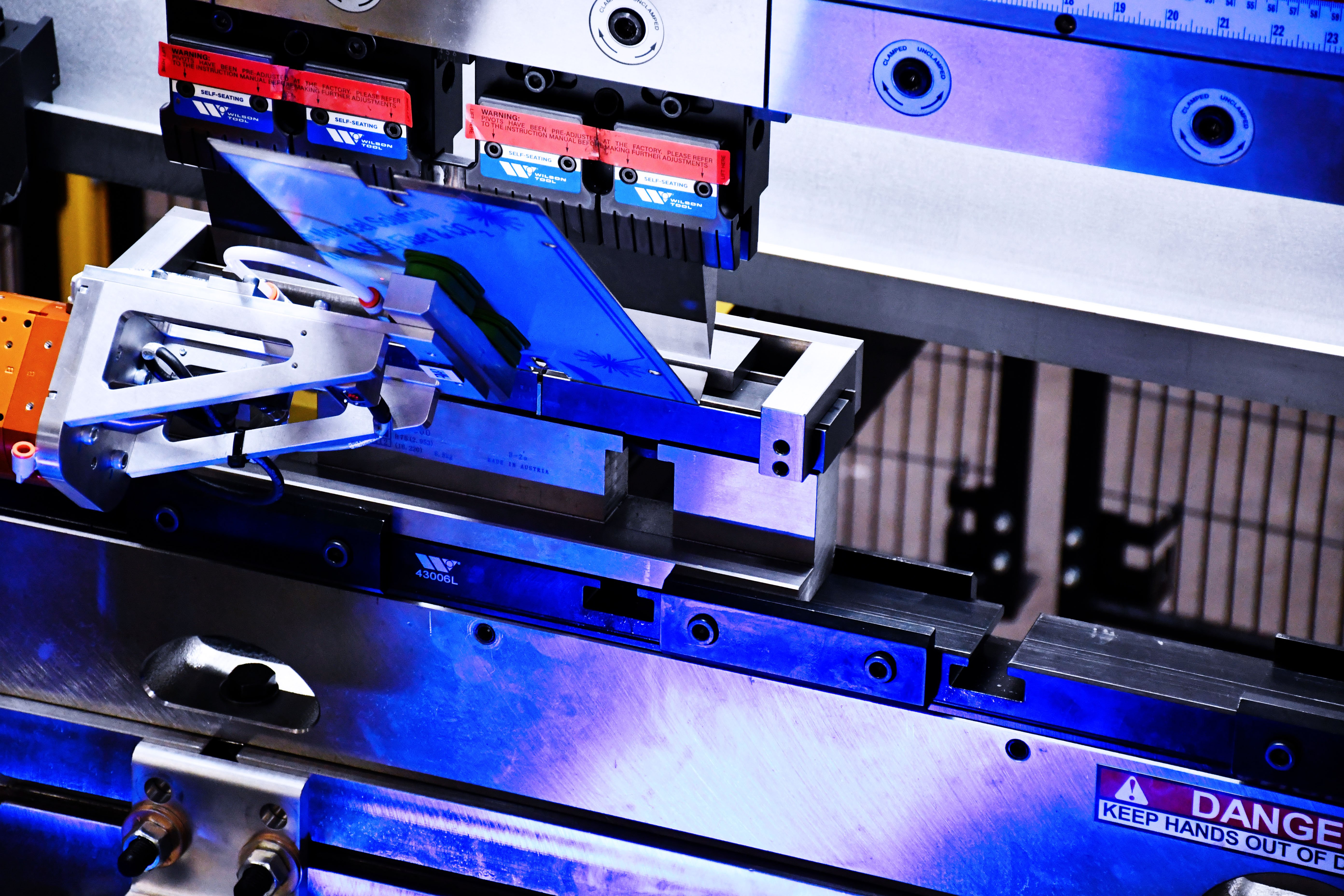
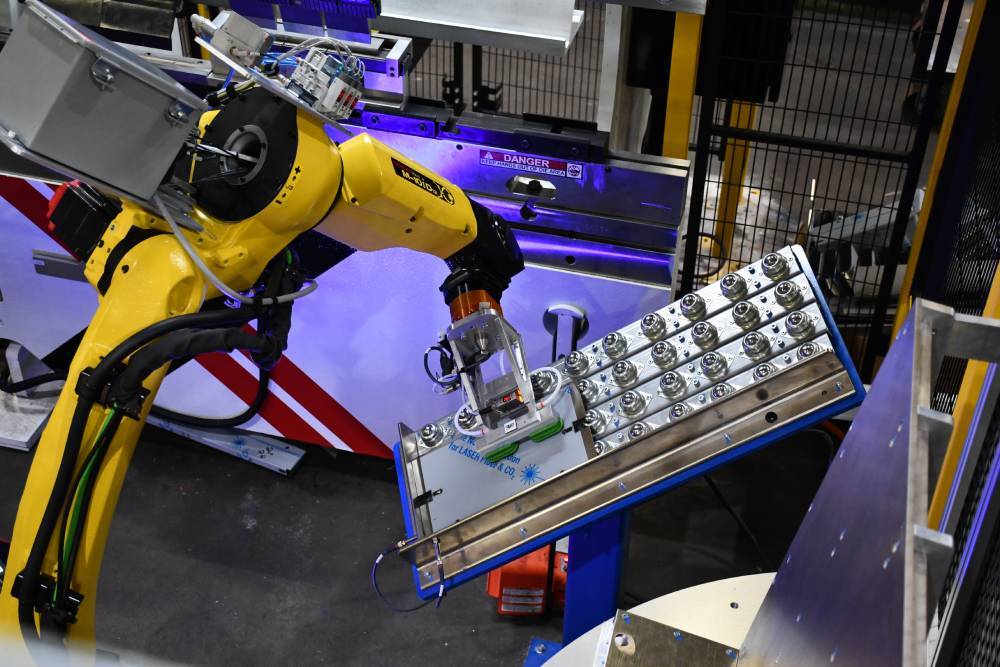
You can see this balance in our own work. Our axle shaft processing cell runs seven part types through seven robots at a 37-second cycle, and our press brake and spot weld cell takes blanks to welded parts in 13 sizes with no operator handling once it starts. Neither one is a single-part machine, and both were scoped around the family before anyone drew a robot.
A flexible cell that doesn't fit your plant isn't flexible. Before you commit to a concept, check how it connects to everything around it.
Changeover, recipe and tooling problems tend to show up in month three, not on acceptance day, so plan support before you sign.
Flexibility costs money, both up front and in complexity. If one part number makes up most of your volume, the design is locked and the product life is long, a dedicated cell will usually give you better throughput and simpler upkeep. In automotive component production, for example, a long-running program with a stable design often justifies dedicated tooling for the high runner while a flexible cell picks up the low-volume variants.
The practical middle ground is common: automate the stable core hard, and give the cell enough flexibility to handle the variants you can predict.
It's a self-contained work area built around one or more robots, designed for a specific set of parts and processes. Unlike an off-the-shelf cell, the tooling, controls, guarding and part handling are engineered around your parts and your floor.
Yes, if the parts are grouped into a family with similar handling needs. Quick-change end-of-arm tooling, recipe-driven programs and vision guidance let one cell run many part numbers. The more the parts differ, the more engineering the cell needs.
Mostly by preventing mix-ups. Part number confirmation, tool verification, presence checks and in-cell inspection stop the wrong part or the wrong program before material is wasted. Consistent robot motion also removes the variation that comes with manual loading.
They can be, especially for lighter parts, lower volumes and teams new to automation. Cobots are easy to redeploy and program. They run slower and carry less payload than industrial robots, so they're a weaker fit when throughput is the main goal.
Start with a list of part numbers, their dimensions, weights, materials and annual volumes. Add your changeover frequency, current scrap causes, how parts arrive and leave, and your controls platform. That gives an integrator enough to propose a realistic concept.
Have a part family you'd like to automate? Send us your part list and volumes, and our engineers will tell you which cell approach fits and why. Talk to an Integrion engineer.