Skip to content

Machine Tending Automation

Robots that load and unload your machines around the clock, freeing skilled operators for higher-value work, backed by full lifecycle support.

What is Machine Tending Automation?

Machine tending automation uses a robot to load raw material into a machine and unload finished parts, handling the repetitive loading cycle so your machine keeps running. It is common on CNC mills and lathes, presses, injection molding, and grinding.

At Integrion, we design machine tending cells around your machines, part sizes, and cycle times. Whether you are tending one machine or several, we help you add capacity and consistency without adding headcount to a repetitive task.

Our Machine Tending Capabilities

CNC Machine Tending

Loading and unloading mills, lathes, and grinders for lights-out production.

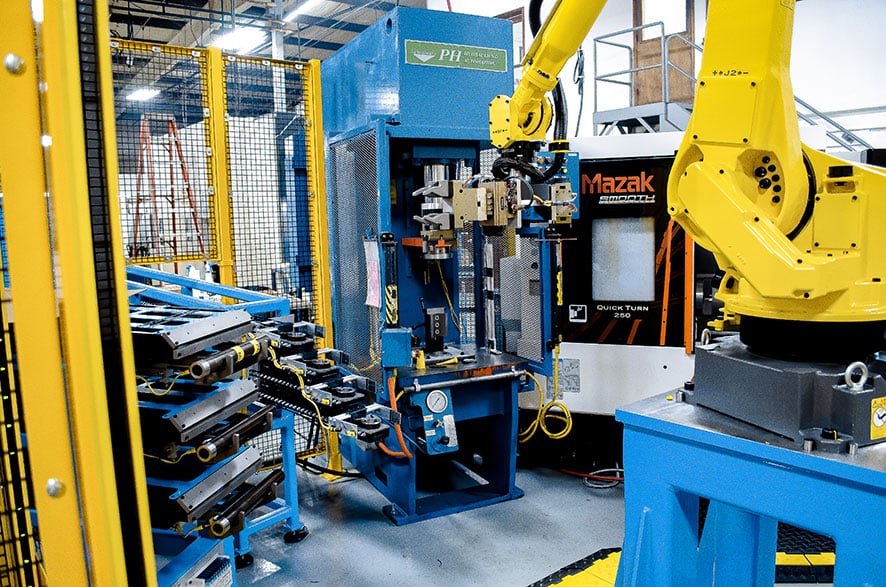
Press Tending

Feeding and removing parts from stamping and forming presses.

Injection Molding Tending

Removing molded parts and managing downstream handling.

Multi-Machine Cells

One robot tending several machines to maximize utilization.

Part Staging & Buffering

Trays, drawers, and conveyors that keep the cell fed between operator visits.

In-Cell Inspection

Vision or gauging built into the cell to verify parts as they are tended.

From Single-Machine Cells to Lights-Out Multi-Machine Systems

The right setup depends on your machines, part flow, and how long you want to run unattended. We build across the full range:

Single-machine cells tend one machine to free an operator and add runtime.

Multi-machine cells let one robot serve several machines for higher utilization.

Lights-out systems add staging and buffering so the cell runs unattended for extended periods.

If you are not sure how much runtime you can gain, that is exactly the kind of conversation we like to have.
Rogue

Why Choose Integrion for Machine Tending Automation?

For more than 40 years, manufacturers have trusted Integrion to design, build, and program automation in-house. That vertical integration means single-source accountability, fewer handoffs, and on-time delivery.

We do more than build systems. We help you plan an automation roadmap, manage risk throughout the project, and support your equipment long after launch with a dedicated field service team. From complexity to confidence, we stay with you across the entire life of your system.

person-with-hard-hat

40+ Years of Experience

star

450+ Robotic Integrations

tube forming tech svg

In-House Design, Build and Integration

throughput

Full Lifecycle Support

light-bulb

Partnership Driven Approach

stock-graph

Certified and Proven

Our Automation Process 

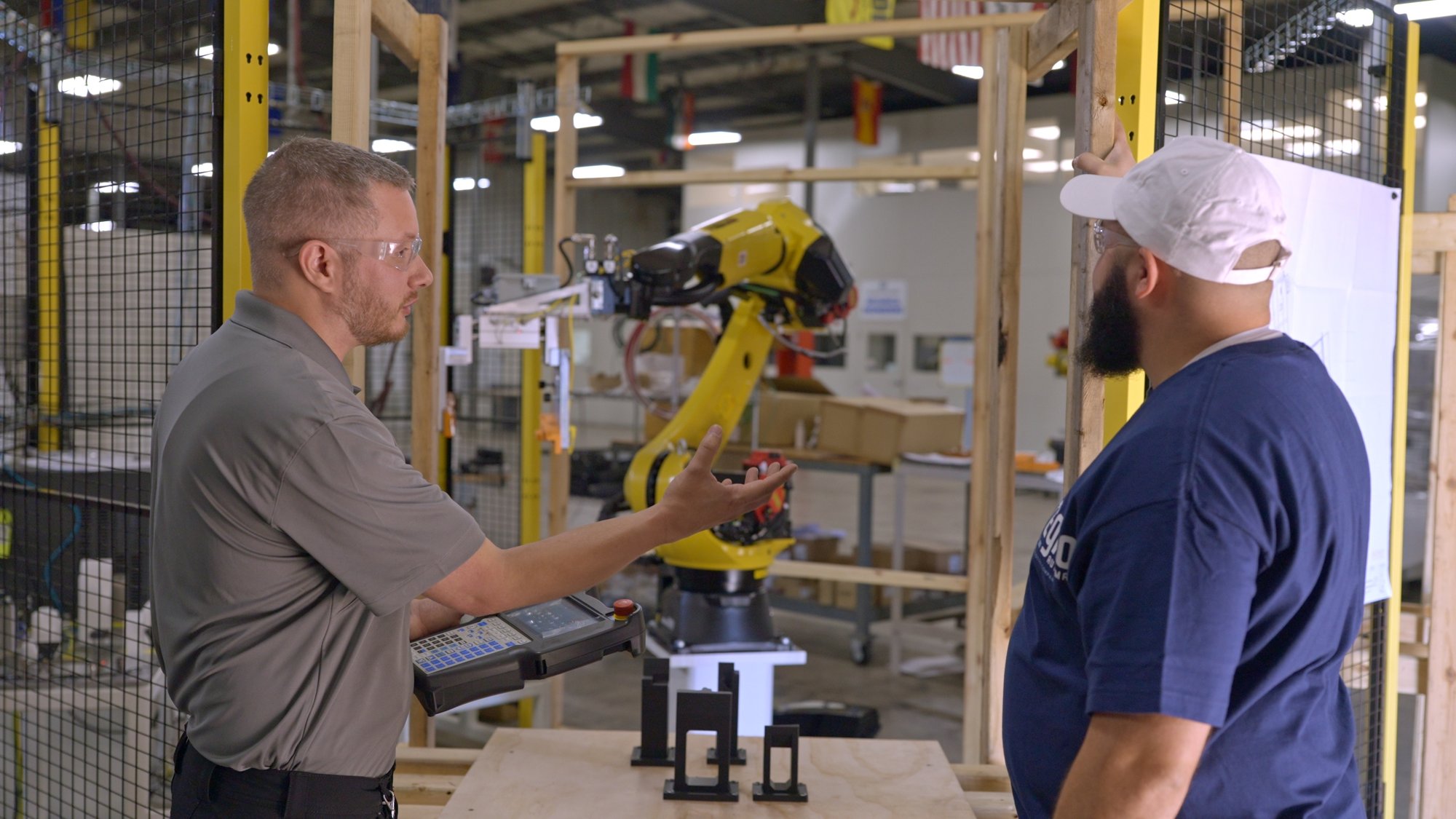
Every machine tending project follows a proven path built to reduce risk and keep your timeline on track. Because we design, build, and program in-house, you get one accountable team from first conversation to long-term support. It is how we move your project from complexity to confidence.

Integrion Automation- Video Stills_1.18.1
Step 1: Consult & Assess
We learn your parts, volumes, and goals
Step 2: Concept & Design
We engineer a solution and show you the options and payback 
Step 3: Build & Integrate
We fabricate, assemble, and program your system in-house. 
Step 4: Validate & Commission
We prove out performance before it reaches your floor. 
Step 5: Support & Sustain
We keep your line running with service, spare parts, and support. 

Frequently asked questions

What is machine tending automation?

Machine tending automation uses a robot to load material into a machine and unload finished parts, handling the repetitive loading cycle so the machine keeps running. It is common on CNC mills and lathes, presses, injection molding, and grinding.

What machines can be automated with machine tending?

Robots commonly tend CNC mills and lathes, stamping and forming presses, injection molding machines, grinders, and inspection or gauging stations. We match the robot and gripper to your machine and part.

Can one robot tend multiple machines?

Yes. A single robot can be positioned to serve two or more machines, which raises utilization and improves the return on the automation. The right layout depends on cycle times and part flow.

What is lights-out machining?

Lights-out machining means running production with little or no operator present, often overnight or through breaks. Adding part staging and buffering lets a tended cell run unattended for extended periods.

What drives the cost of a machine tending system?

Cost depends on the number of machines, part size and weight, cycle time, gripper complexity, and how much staging or inspection you need for unattended running. We scope each project to your goals so you can compare options and payback before committing.

Do you provide service and support after installation?

Yes. Our dedicated field service team offers preventive maintenance, troubleshooting, retrofits, spare parts, and warranty support to protect uptime across the full life of your system.

Let's Talk Through Your Machine Tending Project!

A short conversation is the easiest way to figure out the right approach, with no pressure and no obligation. Tell us what machines you are running and we will help you find the path from complexity to confidence.