Skip to content

Upgrades and Retrofits

Most equipment does not need replacing. It needs updating. We extend the life and the capability of systems you already own,
whether we built them or somebody else did.

What are automation upgrades and retrofits?

Targeted work on equipment you already own, aimed at performance, lifespan, or capability. Upgrades enhance how a system performs through hardware and software updates. Retrofits adapt existing equipment for new manufacturing requirements without a full system replacement. Line moves cover relocation and modernization together.

The reason this category exists is that automated equipment ages unevenly. The frame, the structure, and the mechanics often have years left when the controls, the software, or the tooling have run out of road. Replacing the whole system to fix the part that aged fastest is a common and expensive mistake.

What We Do

Three categories, and most projects touch more than one.

agle-right

System Upgrades

Enhancing performance and extending lifespan through targeted automation hardware and software updates. Controls, drives, HMIs, robot programming, vision, and safety systems. This is also where obsolete components get addressed, which turns a growing spare parts problem into a solved one.

agle-right

Line Moves

Delivering modernization solutions that reduce the need for significant reinvestment. We handle the disconnection, the physical move, the reinstallation, and the recommissioning, and we coordinate the pieces that sit outside our scope so you are not managing four vendors against one shutdown. The update work happens while the equipment is already down. If a system is moving anyway, that is the cheapest window you will get.

agle-right

Retrofits

Adapting existing equipment for new manufacturing requirements without full system replacement. A new part, a higher rate, a tighter quality requirement, added traceability, or robotic loading on equipment that is currently manual. The base stays. What it can do changes.

How do I know whether to upgrade or replace?

It comes down to where the limitation actually is. These are the questions we work through on an assessment, and they are worth thinking about before you call:

  • Is the mechanical base sound, or is the wear structural?
  • Is the limitation controls and software, or is it the machine itself?
  • Are components going obsolete faster than you can source them?
  • How far outside the original design is the new requirement?
  • How much production time can you give up, and when?
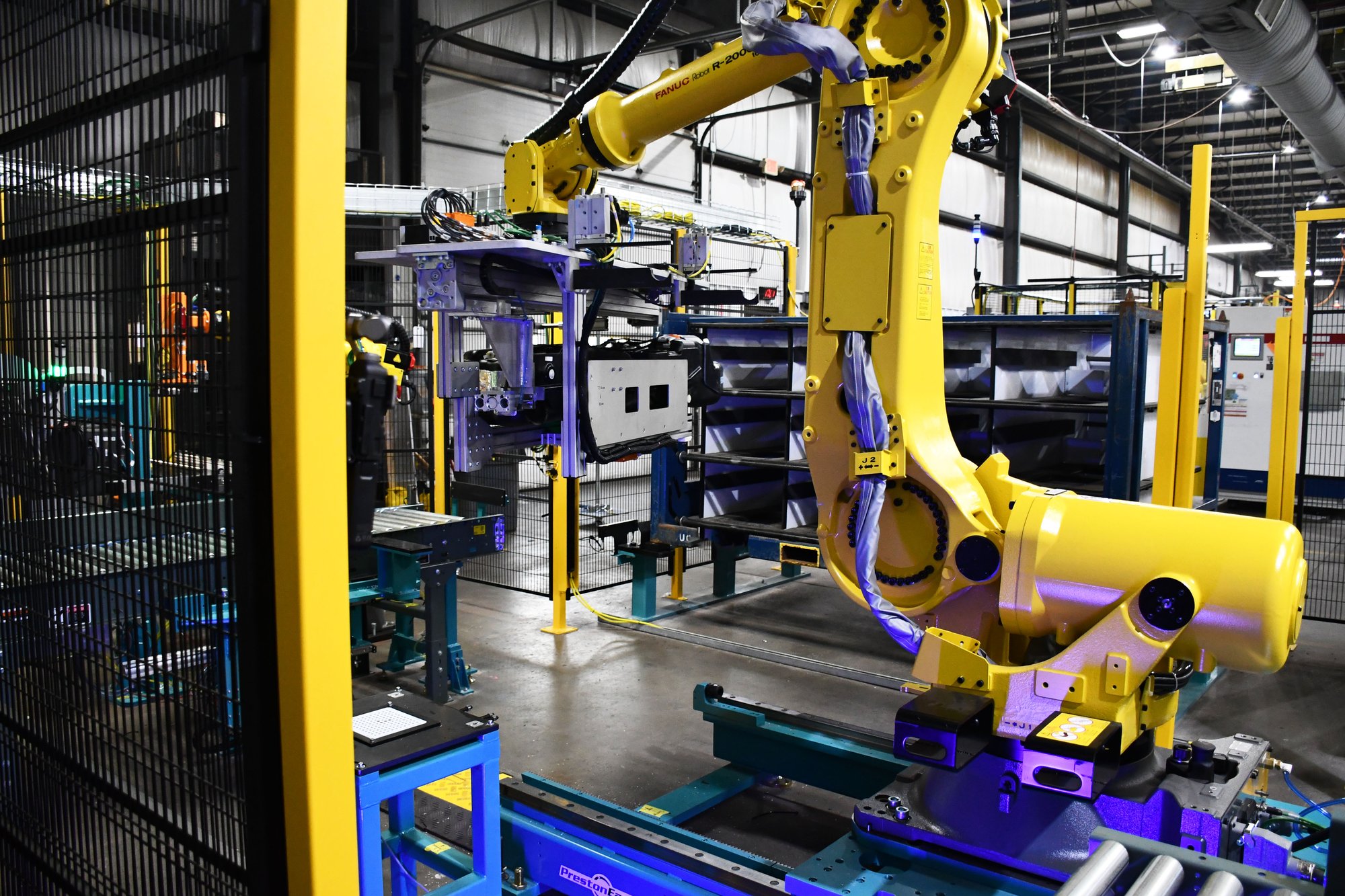
Fuel tank pick up

 If the answer is new equipment, we will tell you, and we build those too. What we will not do is scope a retrofit onto a machine that has earned its retirement. 

Why bring this to an integrator

A retrofit is integration work performed inside constraints somebody else set. That is harder than building new, and it is the specific thing we are good at. We assess what is actually there, we work with the documentation that exists rather than the documentation that should exist, and we do the controls, the programming, the tooling, and the machining in house.

For more than 40 years, manufacturers have trusted us to design, build, and program automated systems in house. From complexity to confidence, we stay with you across the full life of the equipment.

Icon
40+ Years of Experience
Icon
450+ Robotic Integrations
Icon
Controls and Software In House
Icon
Multi-Brand Robot Support
Icon
Integrion and Non-Integrion Equipment
Icon
In-House Machining

How It Starts

Every engagement starts the same way, because a plan built without seeing the equipment is a guess.

Assessment

We evaluate equipment condition, operating environment, usage patterns, and service history, on your floor.

Plan
Our field service engineers build a plan around your production schedule rather than a generic interval, so the work happens when it costs you least.
Execute Scheduled
visits, documented findings, and coordination with your team, with the record staying with the equipment.

Frequently asked questions

What is an automation retrofit?

Adapting equipment you already own to do something it was not originally built to do, whether that is a new part, a new rate, a new quality requirement, or new safety expectations. The structure, the frame, and often most of the mechanics stay. What changes is the capability.

What is the difference between an upgrade and a retrofit?

An upgrade improves how the system performs what it already does, usually through hardware or software updates. A retrofit changes what it is capable of. In practice many projects are both, and the distinction matters mainly for scoping and for how the work is documented.

When is a retrofit better than buying new equipment?

When the mechanical base is sound and the limitation is controls, software, tooling, or capability. Frames, structures, and drivetrains often outlast their controls by a wide margin. When the base is worn out or the new requirement is far outside the original design, new equipment is the honest answer and we will say so.

Can you upgrade obsolete controls?

Yes, and it is one of the most common reasons customers call. Controllers, drives, HMIs, and software that are no longer supported become a spare parts problem first and a downtime problem second. Replacing them is usually cheaper than replacing the machine around them.

Can you add automation to equipment that is currently manual?

Yes. Adding robotic loading, part handling, inspection, or traceability to existing equipment is integration work, which is what we do. The equipment does not have to be ours.

Do you handle line moves and relocations?

Yes. We handle the disconnection, the physical move, the reinstallation, and the recommissioning, and we coordinate the outside pieces so the shutdown has one owner. It also includes the modernization work that is worth doing while the equipment is already down, because a move is the cheapest opportunity you will get to update a system.

Can you retrofit equipment built by another integrator?

Yes. Much of this work is on systems we did not build, often where the original integrator is no longer available. We assess what is there before scoping, because the honest answer sometimes changes once the cabinet is open.

How long does a retrofit take?

It depends on scope, part availability, and how much production time we get. What we can tell you is that the schedule is built around your production calendar and stated before the work starts. Send us what you are running and what needs to change and we will scope it.

Tell Us What Needs to Change

Send us what you are running, what it needs to do that it currently cannot, and when you can give up production time. We will assess it and tell you whether the answer is an upgrade, a retrofit, or new equipment. No pressure and no obligation. It is how we get you from complexity to confidence.