Skip to content

Industries We Form Tube For

Automotive, HVAC, off road, and aerospace. Four decades of forming parts for these markets means we know the failure modes before you hit them.

Why the Industry Changes the Tooling

The forming process is the same everywhere. What changes is what the part has to survive, and that is what drives the tooling. An automotive fuel line and an off road hydraulic line can be the same diameter and need entirely different tools, because one is fighting cycle time in a plant running millions of parts and the other is fighting vibration and pressure cycling in a machine that lives outdoors.

That is why we ask about the application before we talk about the machine. Knowing where a part fails in service tells us more about how to form it than the print does.

Industries We Serve

Automotive

The deepest experience we have, across tiered suppliers and original equipment manufacturers. Engine and transmission oil cooler lines, brake lines, fuel lines, fuel filler tubes, seat products, and air conditioning lines. This market runs on SAE standards, so SAE J2044 quick connects, SAE J1453 O-Ring Face Seal, and SAE J533 flares are routine work for us. High volume means cycle time and repeatability decide the machine, which is where our electric servo series earns its place.

HVAC

Refrigerant lines and coil tube, largely in copper and other non-ferrous material. Soft material forms easily and marks easily, so the tooling has to grip without scoring the sealing surface. Joint integrity is the whole ballgame here, because a formed connection that leaks refrigerant is a warranty claim rather than a rework.

Off Road

Hydraulic and fuel lines built for vibration, contamination, and duty cycles that do not forgive a weak joint. Heavier wall and larger diameter work sits at the upper end of our range, which is where our 1300 and 1600 Series come in. Formed connections beat welded fittings in this market for the same reason they beat them everywhere: one less part and one less thing to fail in the field.

Aerospace

Tube assemblies where the endform has to hold under pressure and the process has to be documented as tightly as the part. Aerospace work is driven by precision and traceability rather than a different forming method, so it typically means capability studies, tighter tolerance control, and material work in stainless. Program requirements are reviewed case by case, and we will tell you plainly what we can and cannot meet.

What Carries Across Every Industry

The market changes. These do not.

Materials
Ferrous and non-ferrous metal and plastic tube, including steel, stainless steel, copper, and brass. Material behavior drives the tooling, so the tool is developed around what you actually run.
Diameter range
Tube from 3/8 inch to 3 inches in outside diameter across five endformer series, with custom builds outside that.
Endforms
Beads, flares, swages, reductions, expansions, and combination endforms including quick connects, plus endforms applied to parts that have already been machined.
Standards work
SAE J533, J1231, J1453, and J2044 forms are all standard work for our tooling team.
Proof before production
Capability studies on request, so the tool is proven statistically rather than demonstrated once.

Why Manufacturers in These Markets Choose Wauseon TubeTech

A dedicated applications team looks at your part before anyone quotes a machine. That is the difference between buying equipment and solving a forming problem, and it is why customers in four very different industries end up at the same supplier.

For more than 40 years, manufacturers have trusted us to design, build, and program tube forming equipment in house. From complexity to confidence, we stay with you across the entire life of your equipment.

Icon
40+ Years of Experience
Icon
Dedicated Applications Team
Icon
Process Evaluations to Simplify and Reduce
Icon
Validated Tooling
Icon
CE Certified Equipment
Icon
Full Lifecycle Support

Our Tube Forming Lifecycle

Wauseon TubeTech machines are built to last decades, and so is our commitment to support them. Six stages cover the whole arc, from the first look at your part to supplying finished parts years later. Not every project uses all six, and plenty of customers join partway through.

Step 1: Process Evaluation We review your prints, processes, and parts, establish the best process for the part, review it with you, and quote it.

Step 2: Design and Build We design the concept, review it with you, and design the tooling package around it.

Step 3: Development A dedicated development technician modifies the tooling to your specifications, with tooling runoff in house, a five-piece tryout with samples submitted for approval, and capability studies available on request.

Step 4: Build to Print Parts produced to your print, with machining handled inside our own group, delivered ready to run.

Step 5: Production Support Uptime recommendations, downtime support, tooling troubleshooting, spare parts and tooling, machine maintenance, and refurbishment and modernization.

Step 6: Finished Part Supply Short run production, overage runs, emergency capacity, and long term supply contracts.

Tell Us What You Are Forming

Send us the part, the material, and where it goes in service, and we will tell you how we would form it. No pressure and no obligation. It is how we get you from complexity to confidence.

Frequently asked questions

Which industries does Wauseon TubeTech serve?

Automotive, HVAC, off road, and aerospace are the four where we have formed the most parts. Within those we work with tiered suppliers, original equipment manufacturers, and contract manufacturers, and our equipment also runs in adjacent markets including filtering, construction products, and electrical distribution.

Does the industry change which machine I need?

It changes the constraints rather than the machine directly. Automotive tends to drive cycle time and repeatability, HVAC drives joint integrity on soft materials, off road drives wall thickness and diameter, and aerospace drives documentation and precision. Those constraints then point to a series.

What automotive tube components do you form?

Engine and transmission oil cooler lines, brake lines, fuel lines, fuel filler tubes, seat products, and air conditioning lines. Common endforms in that market include SAE J2044 quick connects, SAE J1453 O-Ring Face Seal, and SAE J533 flares.

Can you form copper and brass for HVAC applications?

Yes. We form ferrous and non-ferrous metal and plastic tube, including copper and brass. Softer materials change how the tooling has to grip and how the material flows, which is why we develop the tooling around your specific material rather than reusing a generic tool.

What makes off road tube different?

Duty cycle and environment. Off road hydraulic and fuel lines see vibration, contamination, and pressure cycling that punish a marginal joint, which usually means heavier wall and larger diameter work at the upper end of our range.

Do you work with aerospace tube assemblies?

Yes. Aerospace work is driven by precision and documentation, so it typically involves capability studies and tighter tolerance control rather than a different forming process. Program specific requirements are reviewed case by case, so tell us what your program calls for and we will tell you plainly whether we can meet it.

Can an endform replace a welded fitting in my application?

Often, yes, and it is the change that pays for itself fastest. Forming the feature into the tube removes a separate fitting, the weld that attached it, and the leak path that came with it. Send us the assembly and we will tell you whether forming is realistic.

My industry is not listed. Can you still help?

Almost certainly. Tube forming is defined by the part, the material, and the endform rather than the market it ships into. If you are forming tube between 3/8 inch and 3 inches, the conversation is worth having.

Tube Forming Resources

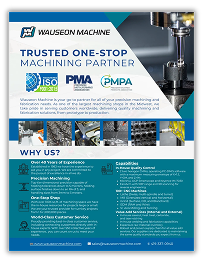
tube-forming-tech brochure

Tube Forming Technologies Brochure 

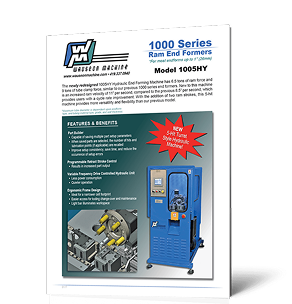
tube-forming-data-sheets

Tube Forming Equipment Data Sheets