Automation Solutions

A custom automation system is an engineering purchase, not a product purchase. What you are buying is judgment: how the process was scoped, how risk was handled before the build, who was actually assigned to the work, and what support exists after installation. Two quotes that look alike can hide very different answers.
Most of what goes wrong on a custom automation project is decided before anyone cuts steel. These are the ten things worth understanding before you commission a system, drawn from what we see when buyers compare proposals. If you want the capability side first, start with our custom automation solutions.
| # | What to know | Why it matters |
|---|---|---|
| 1 | You are buying engineering, not a catalog item | Two similar-looking machines can differ widely in design depth, controls, and safety |
| 2 | Scope narrow, then design for expansion | One process automated well proves out faster than a line that tries to do everything |
| 3 | The obvious components are a fraction of the system | Guarding, safety circuits, controls, part presentation, and integration carry real cost |
| 4 | How your parts arrive drives the whole design | Variation and presentation break more projects than robot selection ever has |
| 5 | Component lead times set the schedule | Long-lead items are ordered early, so late scope changes cost weeks, not days |
| 6 | Ask who is assigned to your project by name | The team that sold the job is not always the team that builds it |
| 7 | Acceptance criteria belong in the contract | Rate, uptime, and quality agreed up front, tested at buyoff, not argued afterward |
| 8 | In-house design and build removes finger-pointing | One accountable team across mechanical, controls, and programming |
| 9 | Controls should be a platform your team can support | A one-off architecture leaves you dependent on whoever wrote it |
| 10 | Support after installation is part of the purchase | Spare parts, preventive maintenance, and training decide year three, not year one |
The most expensive mistake in custom automation is not buying the wrong robot. It is buying too much system on the first try.
Write your own scope of work before you talk to anyone. One part number, one process, one clearly defined operation. A first system that runs reliably teaches your team how to operate, maintain, and expand automation. A system that tries to solve five problems at once usually solves none of them well, and it takes the credibility for the next project with it. 
Then design for expansion. Ask whether a second station can be added, whether another part family can be introduced, and whether the cell can be relocated. That planning costs almost nothing at design and a great deal later.
Buyers tend to add up the visible items, the robot, the controller, the fixtures, plus engineering hours, and treat the total as the machine. The rest of the system is where quotes actually diverge:
A cheaper quote is often a thinner scope rather than a better price. When comparing proposals, compare what each one includes on this list before comparing the numbers.
This is the question buyers ask least and regret most when working with an automation integrator for the first time. Ask which engineers are assigned, how many projects they are carrying, who is on your floor during installation, and who answers the phone eighteen months from now.
The answer tends to split by the type of shop you are talking to. Very large integrators bring depth and process, but a smaller project rarely gets their strongest team, and you become a small account inside a rigid system. Very small shops give you the owner's direct attention, but usually without the engineering rigor, documented risk management, or repeatable quality that a production system needs. Both tradeoffs are real, and neither is dishonest. You just need to know which one you are accepting.
We sit deliberately in the middle: projects large enough to matter to us, with senior engineers who show up on your floor and professional project management behind them. That is the whole reason we take the work we take.
Rigor on a custom project looks like documentation, not confidence. Before fabrication, you should see a defined scope with assumptions written down, a concept and design review you participate in, agreed acceptance criteria for rate, uptime, and quality, a schedule that identifies long-lead components, and a plan for how change requests are priced and approved.
Then it gets tested before it ships. A factory acceptance test against the agreed criteria at the builder's facility, followed by a site test after installation, is the difference between a system that is accepted and a system that is argued about. Ask to see the protocol, and ask what happens if it does not pass. 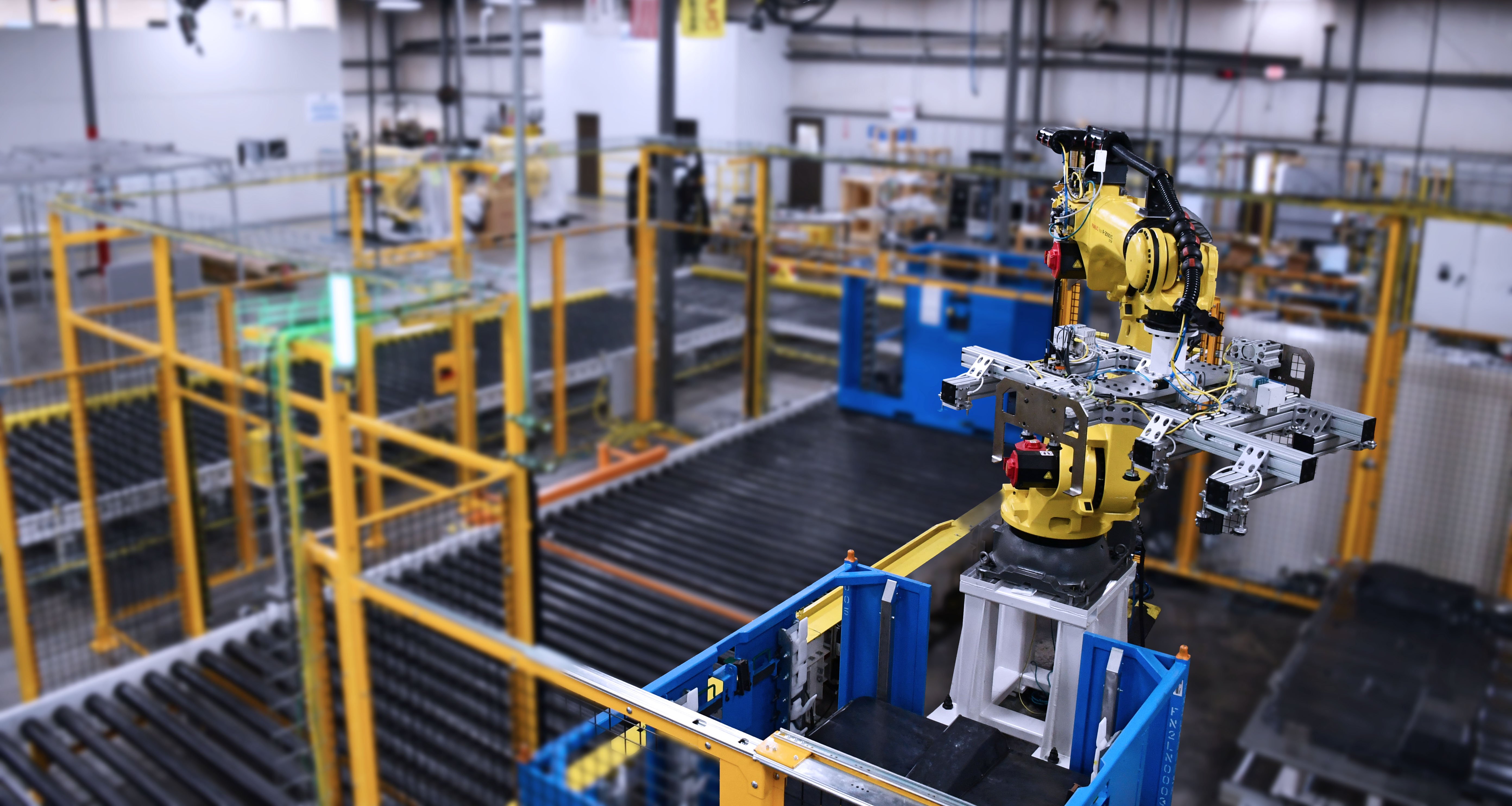
A custom system is a production asset for a decade or more, and the difference between year one and year five is entirely support. An automated cell has scheduled service needs, and the plants that keep uptime high are the ones that planned for them before installation rather than after the first unplanned stop.
Before you sign, get clear answers on three things. What spare parts should sit on your shelf and what are their lead times. Who performs scheduled service, your team or the builder, and on what schedule. And what training your operators and technicians receive, in your plant, on your system. Our field service team supports systems across their full life, which is also why we design them to be maintained rather than just installed.
Custom automation solutions are hard to compare on price alone, so line the quotes up against the same questions rather than against each other's totals. Scope and assumptions. What is included from the cost list above. Who is assigned. Acceptance criteria and test protocol. Controls platform. Spares, maintenance, and training. Then ask each builder for a reference running a job like yours, and call it.
If you are early enough that you are not sure what to scope yet, that is the better time to talk. We come to your facility, walk the process with you, and tell you plainly what is worth automating and what is not. Get in touch with our team to set up a visit.
Most of the schedule is design plus component lead times rather than assembly. Robots and major components are often quoted in months, not weeks, which is why a scope change after ordering costs schedule rather than just money. Ask for a timeline that names the long-lead items and shows when each decision has to be final.
Usually scope, not efficiency. Thinner safety design, less part presentation engineering, a simpler controls architecture, no factory acceptance test, or support and training excluded are the common differences. Compare inclusions item by item before comparing totals, and ask directly what was assumed about your parts.
Cycle time or rate, uptime or availability over a defined test period, quality or defect rate, and the specific parts the test will be run with. Those numbers should be agreed before design, tested at the builder's facility, and retested after installation. Vague criteria are the single most common source of dispute at buyoff.
Ask who is assigned to your project by name, whether mechanical design, controls, and programming are done by one team, what the acceptance test protocol is, and what support looks like after installation. Then ask for a reference running a job like yours and call it. A good integrator will also tell you when automation is not the right answer for a given process.
Generally not yet. Automating an unstable process locks in the instability and makes the change harder later. If a product revision, layout move, or process improvement is coming, either wait for it or design the cell with that change scoped in from the start. This is worth raising with your integrator early rather than at design review.