Automation Solutions

Conveyor wins when the route never changes and volume is high. An AGV wins when heavy loads follow a fixed path on a clean floor. An AMR wins when routes change, traffic is mixed, or you need to start small. Match the method to the move, not to the technology.
This comparison usually gets framed as old versus new. That framing is wrong. Fixed conveyor is not obsolete and mobile robots are not automatically the upgrade. They solve different movement problems, and the answer depends on your loads, your routes, and your floor. Our material logistics and handling applications cover all three, so we have no reason to talk you into one of them.
All three move material without a person carrying it. The difference is how much of the route is decided in advance.
| Decision factor | Conveyor | AGV | AMR |
|---|---|---|---|
| How the route is set | Built into the structure, fixed permanently | Follows a defined guide path: tape, wire, reflectors, or a mapped route | Navigates using sensors and an onboard map, reroutes around obstacles |
| Best load profile | Cartons, totes, and parts moving continuously in the same direction | Pallets and heavy or bulky loads, including trailer loading | Totes, carts, racks, and lighter pallet loads |
| Throughput | Highest and most predictable for a fixed flow | High for repeatable pallet moves | Lower per vehicle, scaled by adding vehicles |
| Route flexibility | Low, changing it is a construction project | Moderate, guide paths can be moved with effort | High, a new route is a software change |
| Floor and facility demands | Occupies permanent space and blocks aisles unless elevated | Needs smooth, clean, level floor and controlled traffic | Needs smooth floor and reliable network coverage, tolerates mixed traffic |
| How you expand | Extend or rebuild the line | Add vehicles and extend the guide path | Add vehicles and update the map |
| Usual failure point | Layout changes and the line is in the wrong place | Floor debris, cracks, and unplanned obstructions | Traffic congestion and throughput assumed rather than modeled |
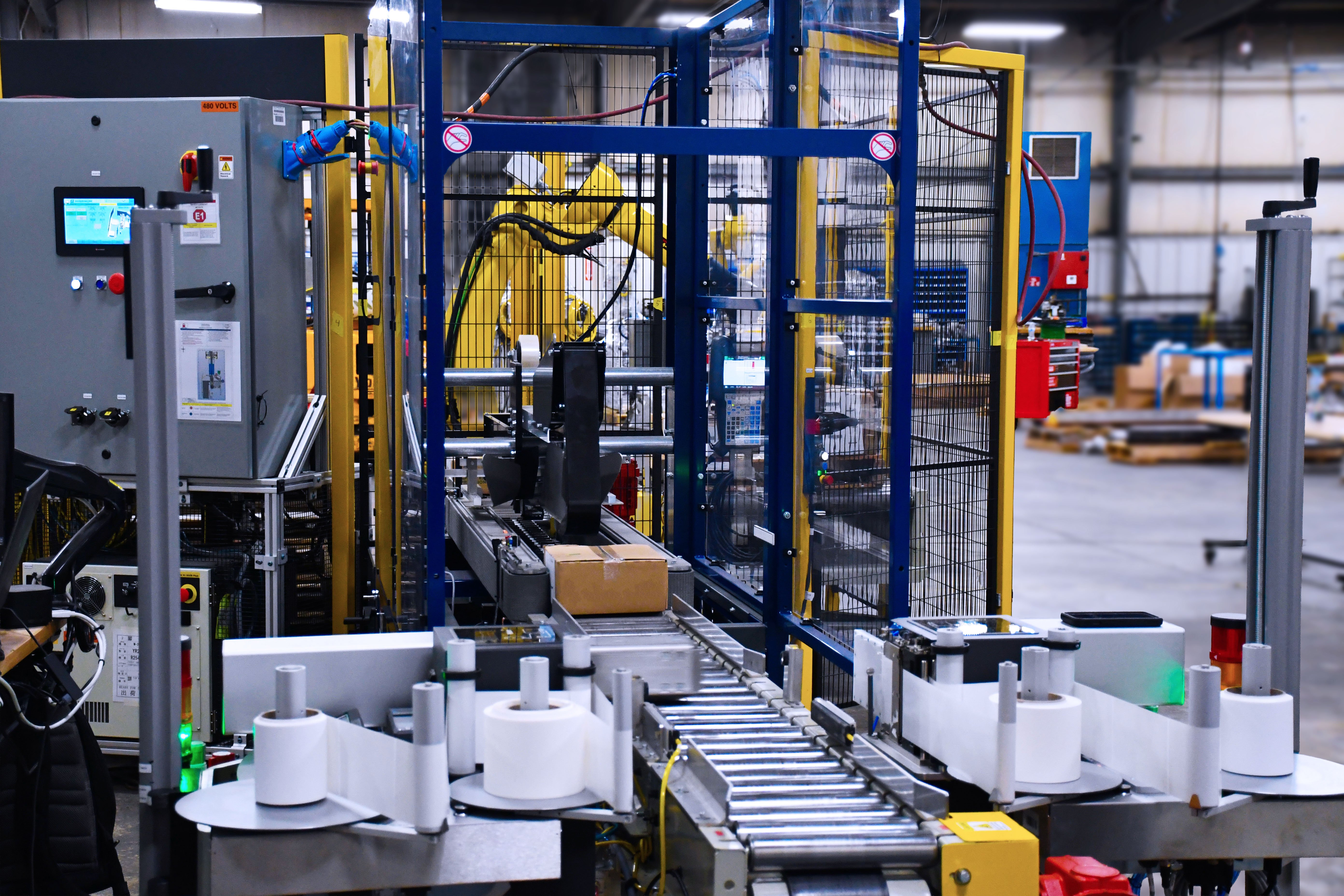
Conveyor gets dismissed as the legacy option, and that costs plants money. If material moves point to point, all shift, in the same direction, nothing beats it on cost per unit moved or on predictability. No fleet to manage, no batteries to charge, no traffic to model.
Choose conveyor when volume is high and the layout is settled, when you need buffering between operations, and when the move is short and constant, such as feeding a packaging line or linking two cells. The real question is not whether conveyor is modern. It is whether this layout will still be right in five years.
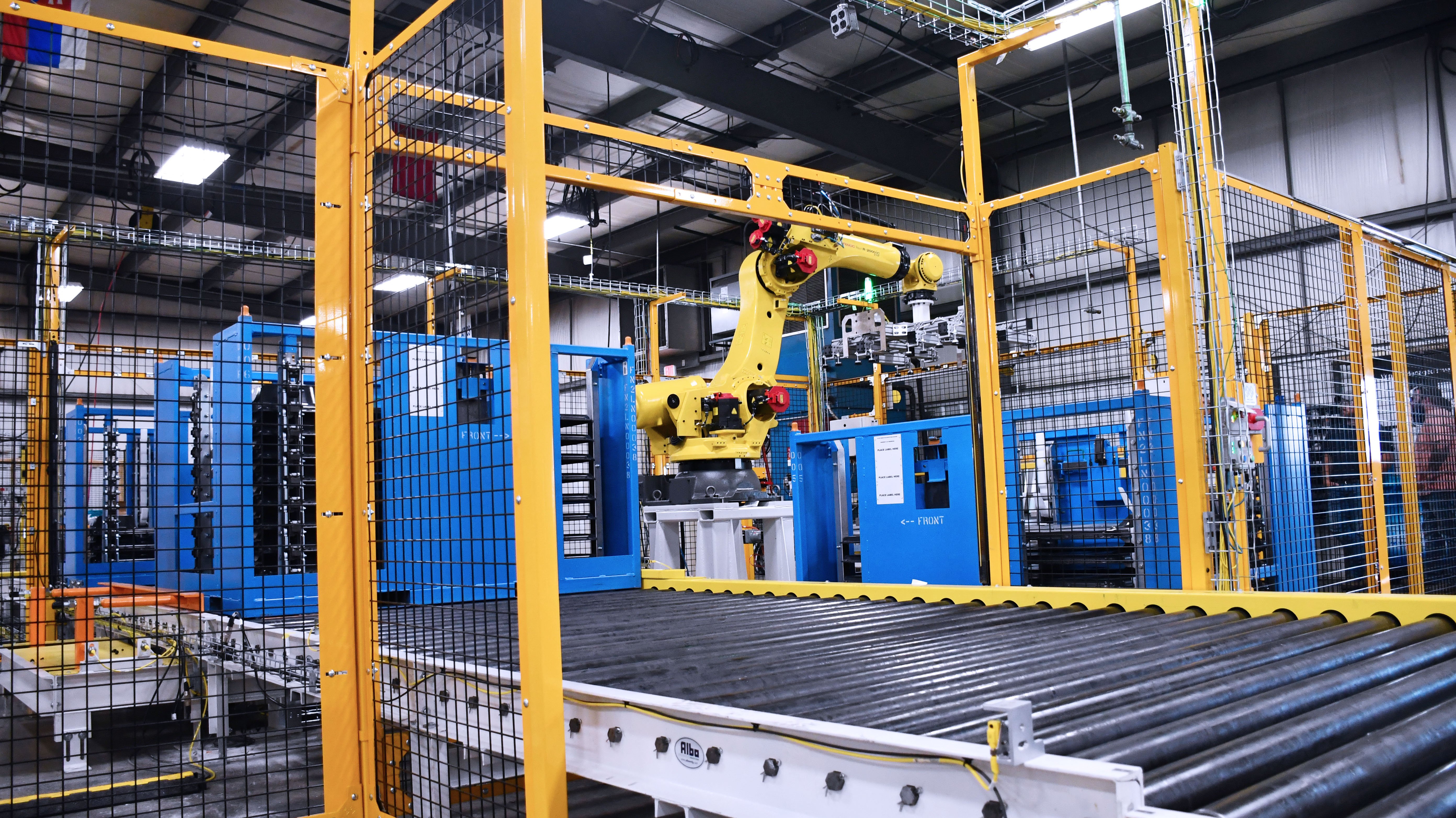
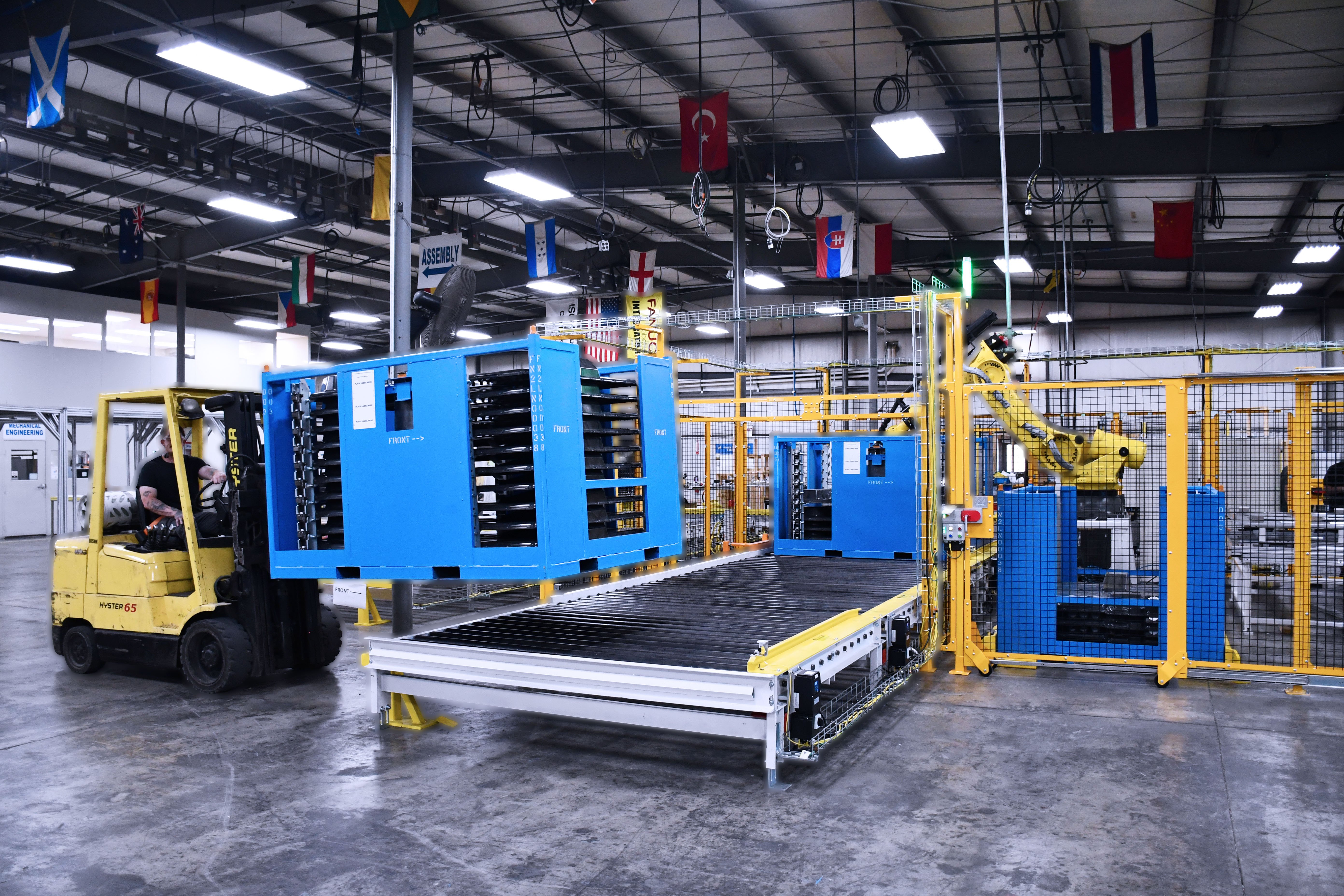
AGVs are the answer for heavy, repeatable moves. Pallets from production to the warehouse. Raw material from receiving to the line. Finished goods into a trailer. The path is the same every time, the load is too heavy for a light mobile robot, and predictability matters more than flexibility.
The tradeoff is discipline. An AGV expects its path to be clear, level, and clean. Plants with floor debris, cracked joints, ramps, or pallets staged in the aisle will fight the system rather than benefit from it. That is fixable, but it belongs in the project instead of surfacing at commissioning.
AMRs earn their keep where the movement problem is not stable. Mixed routes, work in process moving between changing cells, deliveries that depend on what is running today, and floors shared with forklifts and people. Because navigation happens onboard, a new route is a mapping change instead of a construction change.
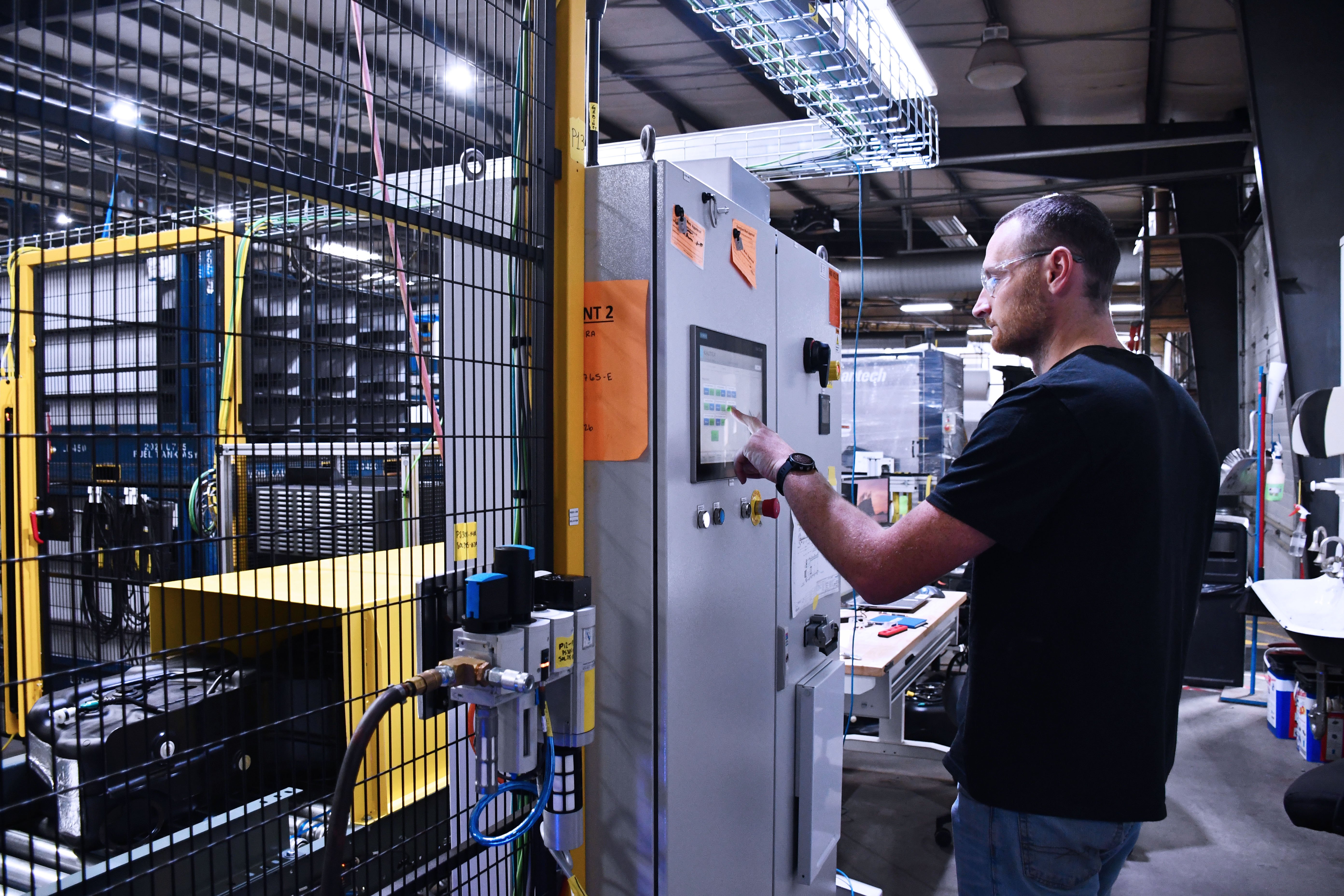
They are also the easiest way to start small. One or two vehicles on the highest-value route proves the concept, and the fleet grows with demand. Fleet management and navigation software matter here, since the vehicles have to be told what to do next by something that knows the state of the plant. AMRs also pair well with machine tending automation, delivering raw material to a tended cell and pulling finished parts away so the cell keeps running between operator checks.
The technology comparison is the easy part. These are the items that decide whether the system performs.
Most well-designed plants do. Conveyor handles dense fixed flows inside a cell or at end of line. AGVs move pallets on the long repeatable trunk routes. AMRs cover the variable moves. Handoffs between them, conveyor to vehicle and vehicle to line, are engineered as part of the system rather than left to an operator.
Treating the three as competing purchases is what produces islands of automation. Treating them as one material flow is what produces a plant that moves faster.
The fastest way through this decision is to have someone walk the route with you. We come to your facility, look at the moves and the floor, and tell you plainly which method fits and which would create a problem you do not have yet. Get in touch with our team to set up a visit.
An AGV follows a predetermined guide path using tape, wire, magnets, reflectors, or a fixed mapped route, and stops when something blocks it. An AMR builds its own map, chooses its route, and drives around obstacles. An AGV is the better choice for heavy repeatable moves on a clean controlled path. An AMR is the better choice when routes and traffic change.
For a fixed, high-volume flow, conveyor is usually the lowest cost per unit moved and the most predictable. Mobile vehicles often look cheaper to install but cost more per move, and the comparison flips as soon as the route needs to change, since reconfiguring conveyor is a construction project and rerouting an AMR is a software change.
Usually some. Mobile vehicles need reasonably smooth and level floors, clear travel lanes, and network coverage along the route. AGVs are the more demanding of the two because they expect the defined path to stay clear. Facility work is normal on these projects, but it should be identified during design rather than discovered at commissioning.
That comes out of the throughput model, not a catalog. It depends on required moves per hour, travel distance, load and unload time at each end, congestion along the route, and charging strategy. A single vehicle handles one load at a time, so replacing a full-time forklift operation typically takes more than one vehicle.
Yes, and that integration is the real work. Vehicles have to exchange signals with line controls, existing conveyor, and plant systems so a delivery is triggered by production rather than by a person pressing a button. Projects tend to stall when the vehicles are bought separately from the integration.