01
Manual loading and unloading at the laser marker
One robot loads, inspects, laser marks and returns every valve body, so only verified, traceable parts move to the next process.


22-second part-to-part cycle target

Every part inspected before marking

2D code marked and verified on every part

Only approved parts move downstream

Repeatable, error-proofed robotic handling

Manual handling removed from the station
An automotive manufacturer needed a better way to mark and inspect machined valve bodies. Every part had to be checked for the right type and complete machining, marked with a 2D code for traceability, and sent on to the next process. Done by hand, that's a lot of loading and unloading at the laser, inspection that can vary from one operator to the next, and defects that might not get caught until further down the line.
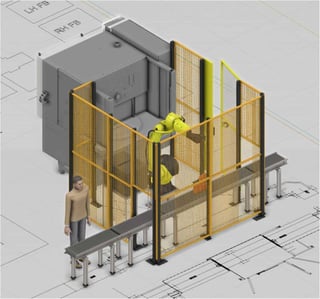
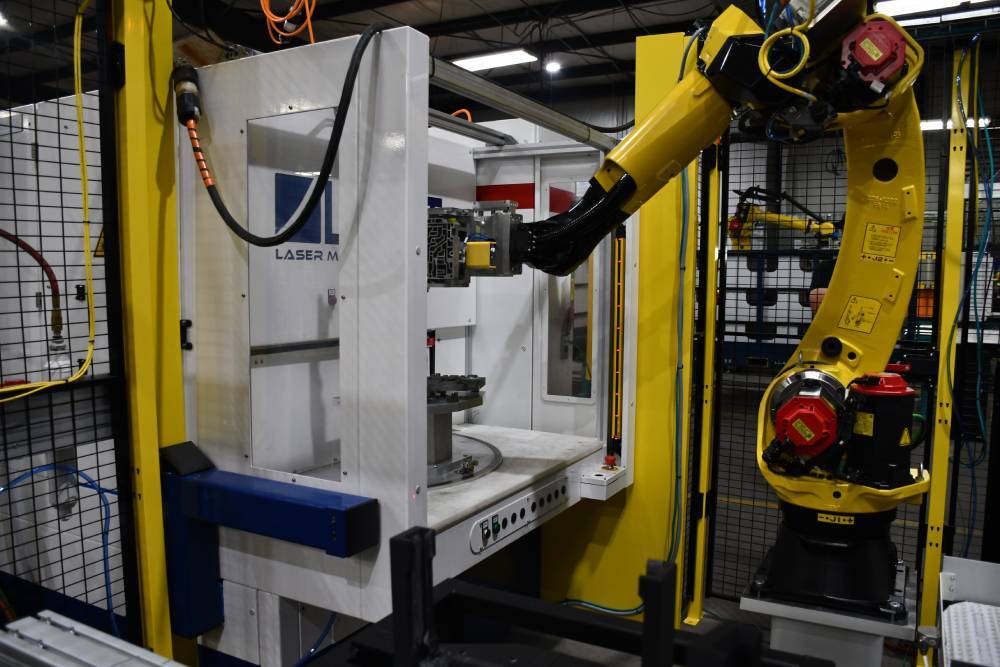
We built a robotic cell that handles all of it in one station. Parts arrive on a pallet conveyor and stop at a set pick point. The robot picks each valve body from its pallet and loads it into a nest on a two-position rotary indexing table.
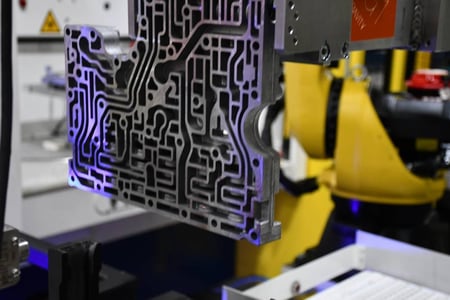
The first stop is inspection. Before anything gets marked, the cell verifies the part type and confirms the machined surface is complete (so a wrong or unfinished part never gets a code). The table then indexes the part into the laser marking area, where it's marked with a 2D code and the code is read back right away to confirm it's legible.
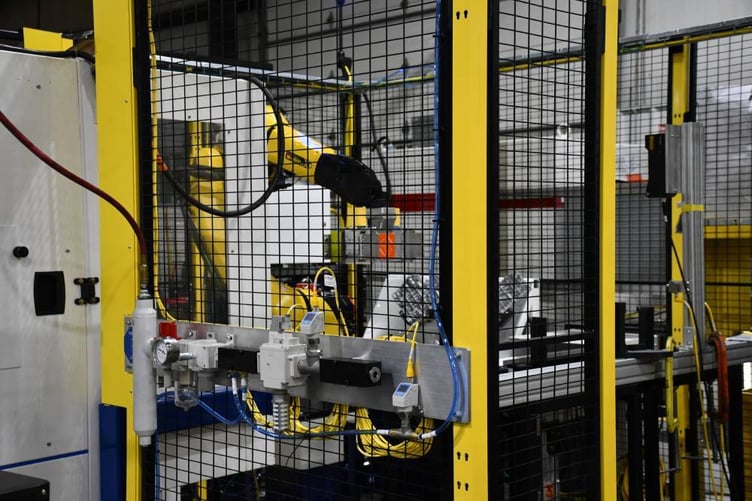
When marking is done, the table indexes the part back to the robot. The robot picks it from the nest and returns it to the pallet, and the pallet flows out to the next process. Only parts that pass inspection and code verification move downstream.
Putting machine tending, inspection and part transfer in one cell takes manual handling out of the station and keeps part flow steady. The robot does the same thing every cycle, which error-proofs the process and makes quality checks consistent. Catching defects before marking also means less scrap and rework later in the line.
The cell is designed around a 22-second part-to-part cycle.
We build cells that tend your machines, inspect every part and verify every mark, so problems get caught at the station instead of down the line. Tell us about your parts.
From valve bodies to axle shafts, see how we automate handling, inspection and traceability for transportation manufacturers.