A U.S.-based PPE startup came to us with a product nobody had automated. Sewn-style hairnets were in high demand, but every one of them was still stitched by hand, overseas. That meant long supply lines, exposure to labor shortages and very little control over volume. They wanted to make them here. They needed a process that didn't exist yet.
The material was the first problem. Spunbond is light and sensitive, and it doesn't behave the same from one roll to the next (push it too hard and it tears, heat it unevenly and the seam fails). On top of that, the line had to run multiple sizes, with changeovers fast enough that switching SKUs wouldn't eat into output.
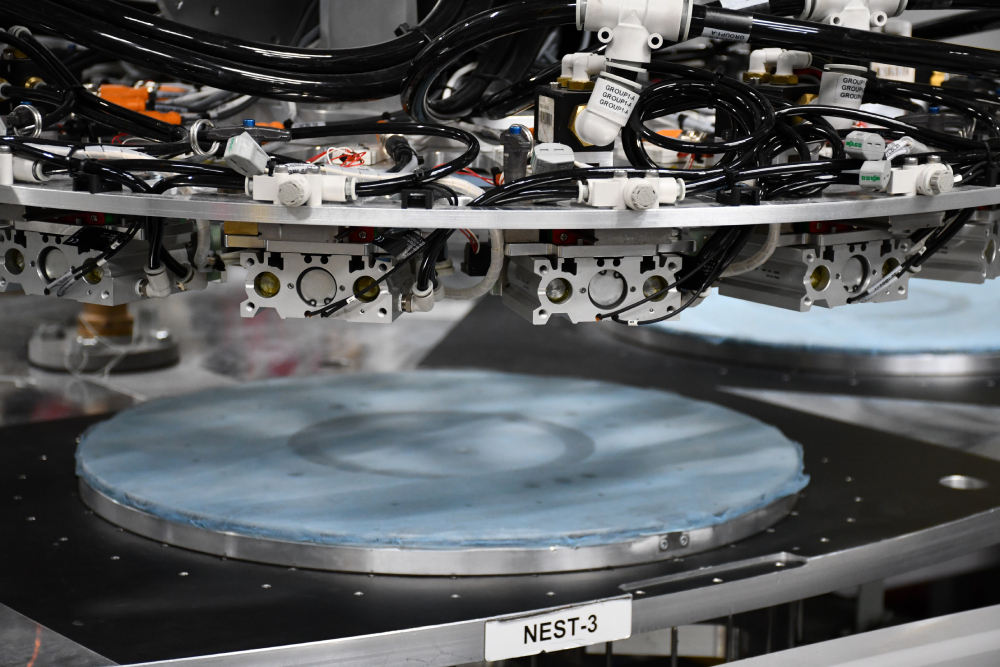
So we stopped trying to automate the stitch. Instead, we developed a thermoplastic welding process that bonds the material without thread. It's durable, it's repeatable, and it takes the most labor-intensive step out of the product entirely. Holding a tight weld window was the key. The cell keeps weld temperature within ±2°F, so quality stays consistent even when the material varies.
We built the system as two machines working together inside a controlled cleanroom environment, which protects the product and keeps conditions stable shift after shift. Quick-change tooling lets operators move between sizes without a long teardown. And because the product and the process were being developed at the same time, we ran the project through a structured project management process that kept design, material handling, testing and build tied together from concept through install.
The result is a first-of-its-kind automated cell that produces one hairnet per second. That's millions of hairnets a year from a product that used to depend entirely on manual labor halfway around the world.
For the startup, it means a steady domestic supply and far less exposure to overseas disruption. For anyone else looking at reshoring, it's a useful model. When there's no automated process to buy off the shelf, you can co-develop the product and the process together, and bring critical manufacturing back to the U.S. on terms that hold up at scale.