Skip to content

Tooling Development

Custom forming tooling designed, machined, and proven out on our own tryout machines before it ever runs on your floor. Our tooling team has been doing this alongside customers for more than 40 years.

What is tube end forming tooling development?

In tube end forming, tooling is the set of dies, clamps, and punches that shape the end of the tube. Tooling development is the engineering work between a part print and a tool that produces that feature repeatably in production. It covers how many hits the form takes and in what order, how the material will flow and thin, which coatings and lubricants suit your material, and whether the finished tool actually holds your tolerance.

This is where tube forming succeeds or fails. A machine is a machine. The tooling is what decides whether your part comes off the line to print, cycle after cycle, and it is the hardest part of the process to outsource to someone who did not build the equipment.

Tooling Dev 2024

Our Tooling Development Capabilities

Form Progression Design

Part progression drawings that break your endform into the right number of hits, in the right order, so the material is never asked to move further than it can in one stroke.
Finite Element Analysis

Modeling material flow, wall thinning, and wrinkle risk before any steel is cut, which is far cheaper than finding the problem in tryout.

Capability Studies

Available on request, a capability study runs the tool through enough parts to prove statistically that it holds your tolerance, not just that it can make one good sample.

Coating and Lubricant Selection

Recommendations matched to your material, whether you are running steel, stainless, copper, or brass. Material behavior drives the tool, so we develop around what you actually run.

Carbinite Surface Texturing

Surface treatment that improves material flow across the tool face and extends tool life in high volume production.

Short-Run Development Forming

We form your early parts on our own development machines while the process is still taking shape, so you are not buying equipment to find out whether the endform works.

What You Receive

Tooling development is not finished when the tool is cut. You get the documentation to set it up, run it, and maintain it without calling us every time it comes out of the machine.

Every completed design package includes:

  • Tooling component prints
  • Set-up information
  • Coating recommendations
  • Lubricant recommendations


If your feature is not on that list, it is worth asking. Most of what we develop started as a part nobody had formed before.

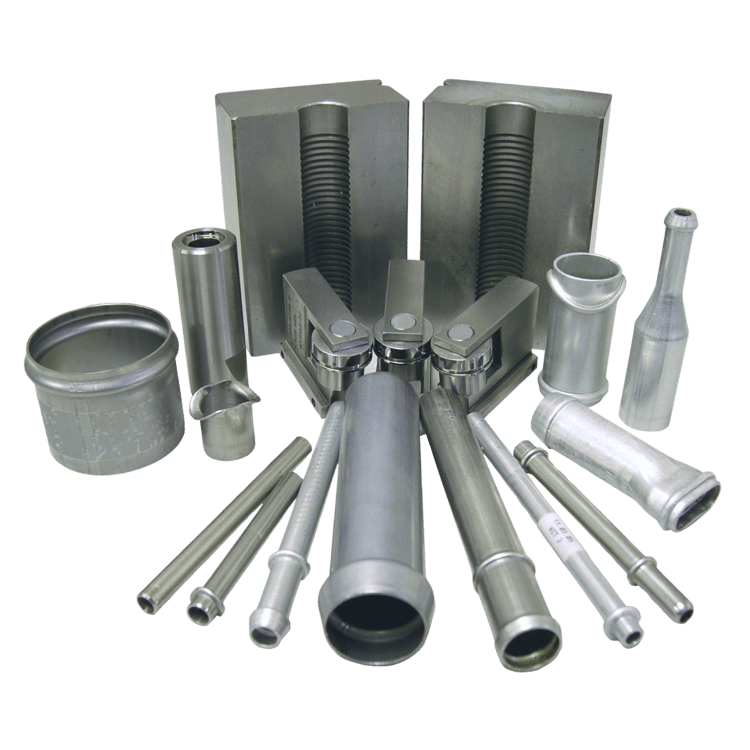
Tooling and end forms set

Tryout and Sample Submission

A dedicated development technician is assigned to modify the tooling to your specifications, and tooling runoff happens in house on a machine matching yours. You get a five-piece tryout with samples submitted for your approval before anything ships, and capability studies are available on request.

Endforms We Develop Tooling For

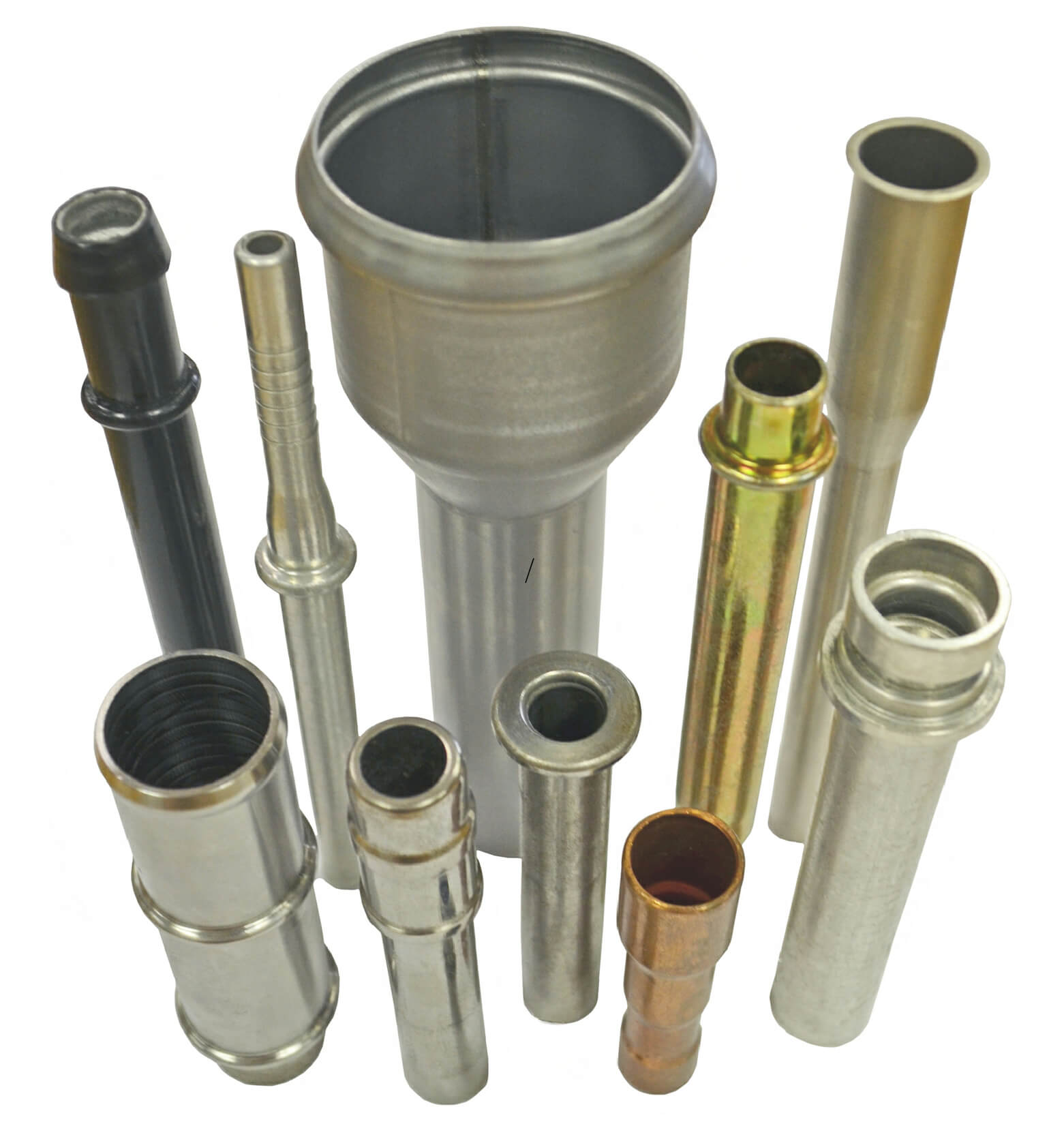
Standard SAE flares and beads. O-Ring Face Seal, with the sleeve locked or unlocked. Triple bead, COR, lock blocks, and roll barbs. We also apply endforms to parts that have already been machined, which lets you consolidate operations that would otherwise sit at two workstations.

Why Manufacturers Bring Us Their Tooling

We have dedicated end forming machines for tooling tryout, with an equivalent model for every machine we build. Your tooling is validated on the same configuration that will run it in your plant, not on the closest thing available.

Add an in-house CNC machining facility to that and the loop closes: the people who designed your tool machine it, prove it out, and are still here when it needs a second one. From complexity to confidence, we stay with you across the entire life of your equipment.

Icon
40+ Years of Tooling Development
Icon
Tryout Machine for Every Model We Build
Icon
In-House CNC Machining
Icon
FEA Before Steel Is Cut
Icon
Capability Studies Available
Icon
Tooling for Any Manufacturer’s Machine

Our Tube Forming Lifecycle

Wauseon TubeTech machines are built to last decades, and so is our commitment to support them. Six stages cover the whole arc, from the first look at your part to supplying finished parts years later. Not every project uses all six, and plenty of customers join partway through.

Step 1: Process Evaluation We review your prints, processes, and parts, establish the best process for the part, review it with you, and quote it.

Step 2: Design and Build We design the concept, review it with you, and design the tooling package around it.

Step 3: Development A dedicated development technician modifies the tooling to your specifications, with tooling runoff in house, a five-piece tryout with samples submitted for approval, and capability studies available on request.

Step 4: Build to Print Parts produced to your print, with machining handled inside our own group, delivered ready to run.

Step 5: Production Support Uptime recommendations, downtime support, tooling troubleshooting, spare parts and tooling, machine maintenance, and refurbishment and modernization.

Step 6: Finished Part Supply Short run production, overage runs, emergency capacity, and long term supply contracts.

Send Us a Print

The fastest way to find out whether your part can be formed is to show us. Send a print and a material and we will tell you honestly whether it is straightforward or whether it needs development work. No pressure and no obligation. It is how we get you from complexity to confidence.

Frequently asked questions

What is tube end forming tooling?

Tube end forming tooling is the dies, clamps, and punches that shape the end of a tube. The tooling determines the geometry, the tolerance, and how many hits the form takes, which makes it the part of the process that decides whether the endform is repeatable.

How do you develop tooling for a new endform?

We start from your part print and material, design the form progression, model material flow with finite element analysis, machine the tooling in house, and prove it out on a development machine with a five-piece tryout and sample submission. You receive component prints, setup information, and coating and lubricant recommendations with the finished package.

What is a capability study?

A capability study runs the tool through enough parts to show statistically that it holds your tolerance, rather than demonstrating one good part. It is how you know the tooling is production ready before it ships, and it is available on request.

What materials can you develop tooling for?

Steel, stainless steel, copper, brass, and other ferrous and non-ferrous materials, along with plastic tube. Material behavior drives the form progression, so the tooling is developed around what you are actually running.

Can you develop tooling for machines built by another manufacturer?

Yes. Whether the equipment is ours or another builder’s, we can develop tooling for it, and integrate and automate around it, rather than requiring you to replace a machine that is still working.

Do you make short runs of parts during development?

Yes. We offer short-run end forming and end finishing on our own development machines. This suits the early stages of a new endform, when it is more economical to use our equipment than to buy your own before the process is settled.

Can an endform replace a welded or machined joint?

Often, yes, and it is worth asking. Forming the feature into the tube removes a separate fitting, the weld that attached it, and the leak path that came with it. We can review an existing assembly and tell you whether forming is a realistic alternative.

Where do I go for replacement tooling?

AlmostReplacement and wear tooling for machines already in production is handled through our spare parts team, who can build to the original print or reverse engineer from a worn sample.

Tube Forming Resources

tube-forming-tech brochure

Tube Forming Technologies Brochure 

tube-forming-data-sheets

Tube Forming Equipment Data Sheets