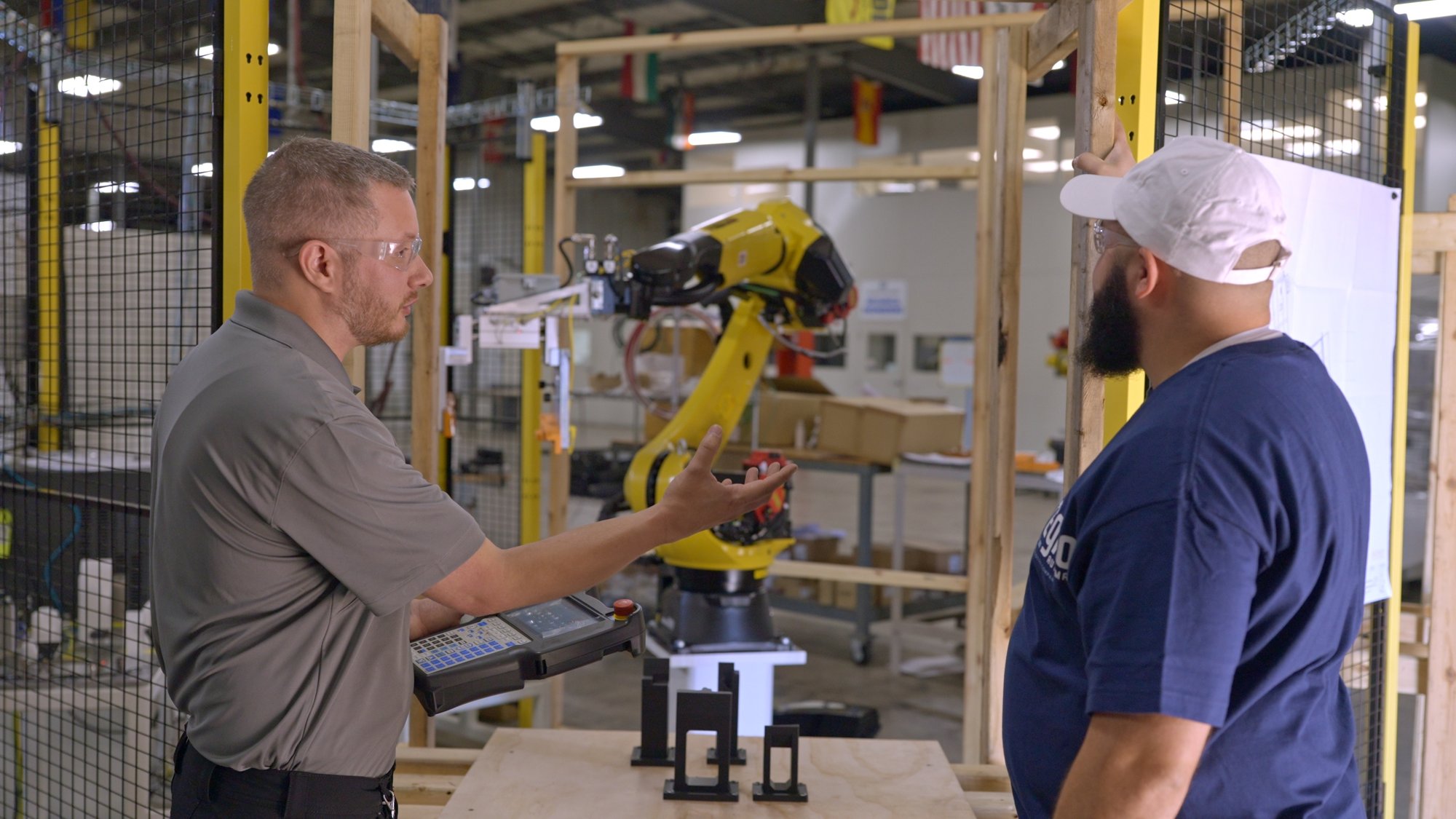
Robotic Welding
Consistent, repeatable welds for strength-critical joints.
Part joining is the step where two or more components become one, through welding, fastening, riveting, pressing, or adhesive bonding. Automating it brings consistent joint quality, repeatable placement, and documented results, which matters most where strength and reliability are critical.
At Integrion, we design joining processes around your materials, joint requirements, and volumes. Whether you need robotic welding, automated fastening, or precise adhesive bonding, we help you produce strong, consistent joints and verify them in the same cell.
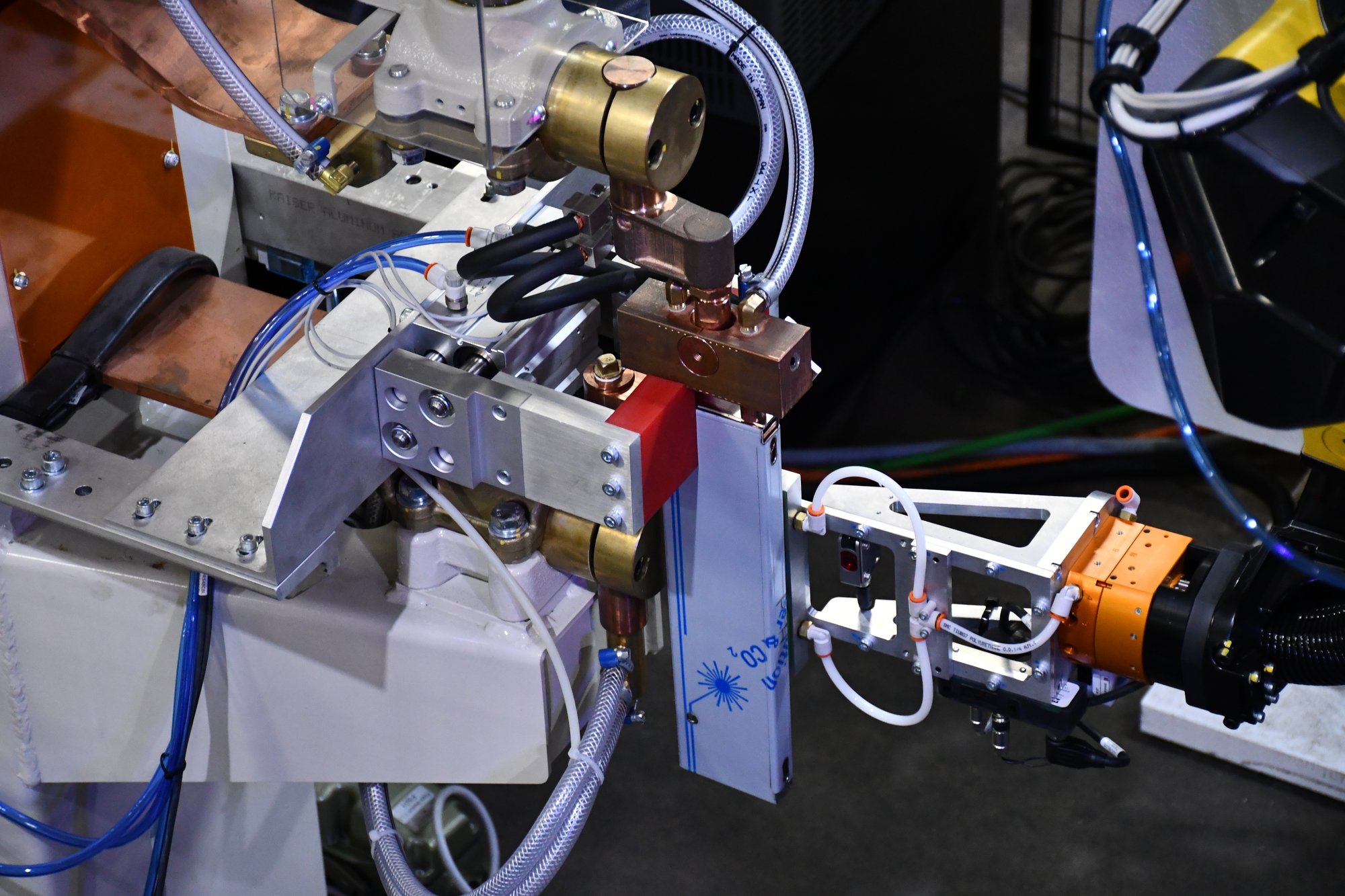
Consistent, repeatable welds for strength-critical joints.
Torque-controlled fastening with error-proofing.
Mechanical joining for sheet and structural parts.
Force-monitored insertion for reliable mechanical joints.
Precise adhesive application and cure for bonded assemblies.
Vision and force data that confirm each joint is good.
The right process depends on your materials, joint requirements, and volumes. We build across the full range:
Standalone joining stations automate one welding, fastening, or bonding step.
Multi-process cells combine several joining methods in one integrated station.
Verified joining cells add inspection and data so every joint is confirmed and recorded.
If you are not sure how to join your parts reliably, that is exactly the kind of conversation we like to have.
For more than 40 years, manufacturers have trusted Integrion to design, build, and program automation in-house. That vertical integration means single-source accountability, fewer handoffs, and on-time delivery.
We do more than build systems. We help you plan an automation roadmap, manage risk throughout the project, and support your equipment long after launch with a dedicated field service team. From complexity to confidence, we stay with you across the entire life of your system.
Every joining project follows a proven path built to reduce risk and keep your timeline on track. Because we design, build, and program in-house, you get one accountable team from first conversation to long-term support. It is how we move your project from complexity to confidence.

Part joining is the step where two or more components are permanently or semi-permanently connected, through welding, fastening, riveting, pressing, or adhesive bonding. It is a core part of most assembly processes.
Common automated methods include robotic welding, screwdriving and fastening, riveting and clinching, press-fit insertion, and adhesive bonding. We select the method and tooling to match your materials and joint requirements.
Automated joining applies the same force, torque, path, or material every cycle, which produces consistent, repeatable joints. Built-in monitoring flags a joint that falls out of spec before the part moves on.
Yes. Torque values, weld data, and inspection results can be logged per part and tied into traceability systems, which is important in automotive, life sciences, and other regulated industries.
Cost depends on the joining method, the number of joints, cycle time, material handling, and how much inspection and data you need. We scope each project to your goals so you can compare options and payback before committing.
Yes. Our dedicated field service team offers preventive maintenance, troubleshooting, retrofits, spare parts, and warranty support to protect uptime across the full life of your system.
A short conversation is the easiest way to figure out the right approach, with no pressure and no obligation. Tell us what you need to join and we will help you find the path from complexity to confidence.