Automation Solutions
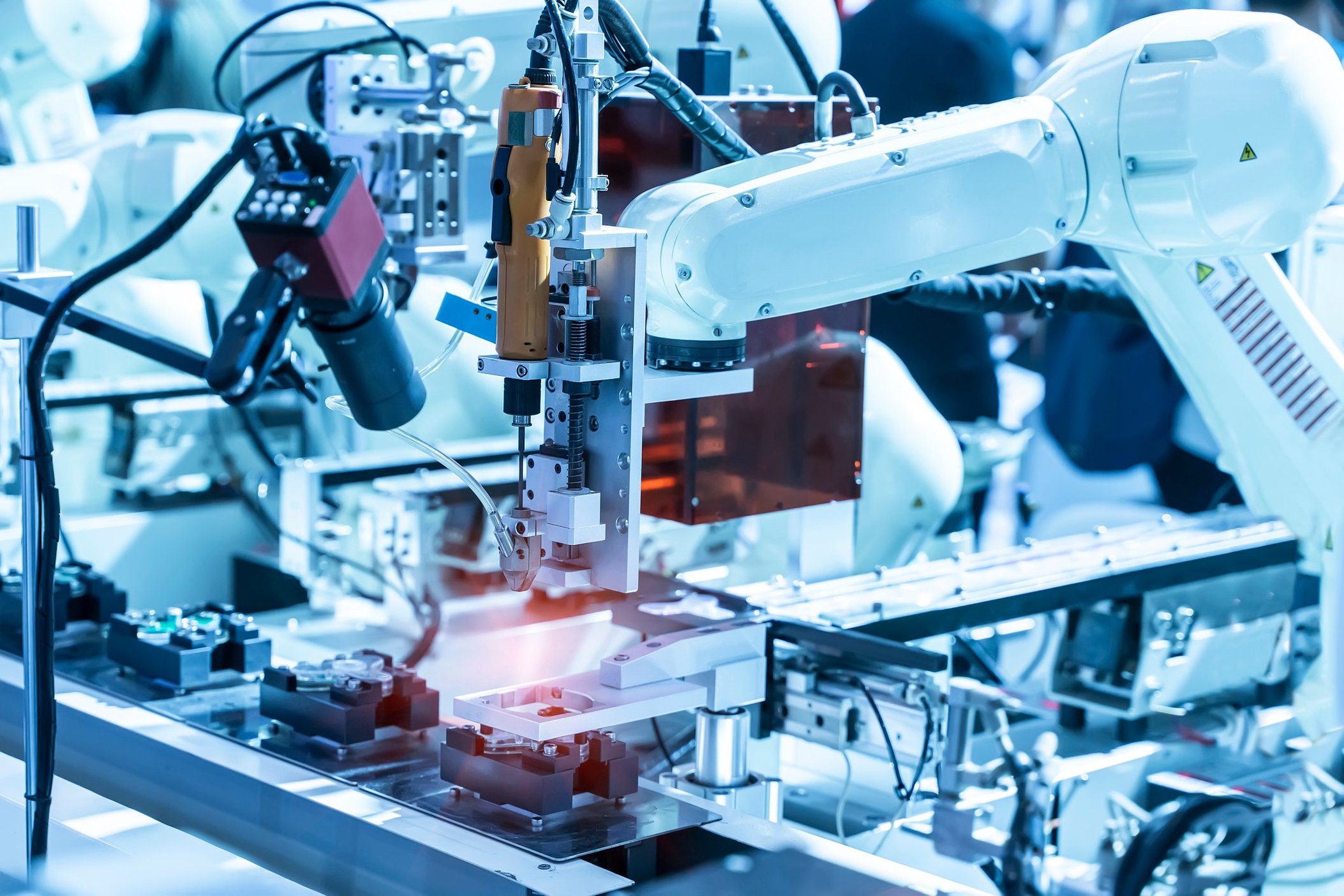

For medical device manufacturers, success increasingly depends on the ability to deliver higher volumes with greater consistency and stronger compliance in a challenging labor environment. Strategic automation offers a path forward by embedding repeatability, traceability, and verification directly into manufacturing processes.
Automation changes the nature of manufacturing work rather than eliminating it. By reducing reliance on repetitive manual tasks, automated systems enable organizations to redeploy employees into higher value roles such as equipment oversight, troubleshooting, and continuous improvement.
This shift improves workforce stability and reduces turnover, because employees develop deeper technical skills while organizations retain critical institutional knowledge. In an environment where labor availability remains uncertain, automation helps manufacturers maintain production schedules with fewer disruptions. While labor cost savings contribute to return on investment, many manufacturers find that improved schedule reliability and reduced dependency on hard to staff roles deliver even greater value.
Successful automation in regulated industries requires early alignment with validation and quality teams. Systems should be designed with qualification requirements in mind from the beginning, rather than retrofitted later in response to validation challenges.
This includes incorporating risk based design principles, clear documentation structures, and traceability from user requirements through testing. Integrion Automation follows this approach by aligning system development with GAMP guidance and customer validation strategies from early design through factory testing. When engineering, quality, and regulatory teams collaborate early, validation activities become more predictable and efficient.
Well structured documentation, including functional specifications, design specifications, failure mode analyses, traceability matrices, and test protocol s, supports smoother installation and qualification while reducing late stage surprises. Treating validation and quality planning as integral parts of automation design helps manufacturers minimize risk and accelerate time to production.
When evaluating automation opportunities, manufacturers benefit from a decision framework that extends beyond initial capital cost. Key considerations include the impact of a process on quality and consistency, scalability to future products or volumes, reduction of operational risk, lifecycle support requirements, and workforce implications.
Organizations that adopt this broader view are better positioned to select automation solutions that align with long term operational and business objectives. This approach shifts automation from a transactional equipment purchase to a strategic manufacturing capability that supports ongoing competitiveness.
Automation systems require ongoing attention to deliver their full value over time. Preventive maintenance, spare parts planning, performance optimization, and system upgrades all play critical roles in sustaining productivity across the lifecycle of the equipment.
Manufacturers increasingly look for automation partners that provide dedicated lifecycle support rather than relying exclusively on internal resources. Integrion Automation supports this model through ongoing service, training, and optimization programs designed to help manufacturers maintain performance as production demands and technologies evolve.
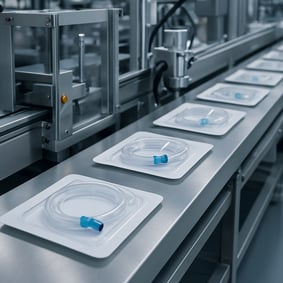
Automation should be viewed as a living system that grows alongside the manufacturing operation rather than a fixed asset that is installed and forgotten. When automation is aligned with quality planning, designed for scalability, and supported throughout its lifecycle, it enables manufacturers to move from operational complexity to sustained confidence.
Medical device manufacturers face increasing pressure to deliver safe, high quality products at scale while navigating labor constraints and regulatory scrutiny. Strategic automation provides a way to meet these demands by combining repeatable precision, robust traceability, and integrated verification with a flexible, scalable system design.
When paired with thoughtful workforce transformation, strong validation alignment, and comprehensive lifecycle support, automation becomes more than a productivity tool. It evolves into a core contributor to long term competitive advantage in medical device manufacturing.