Automation Solutions

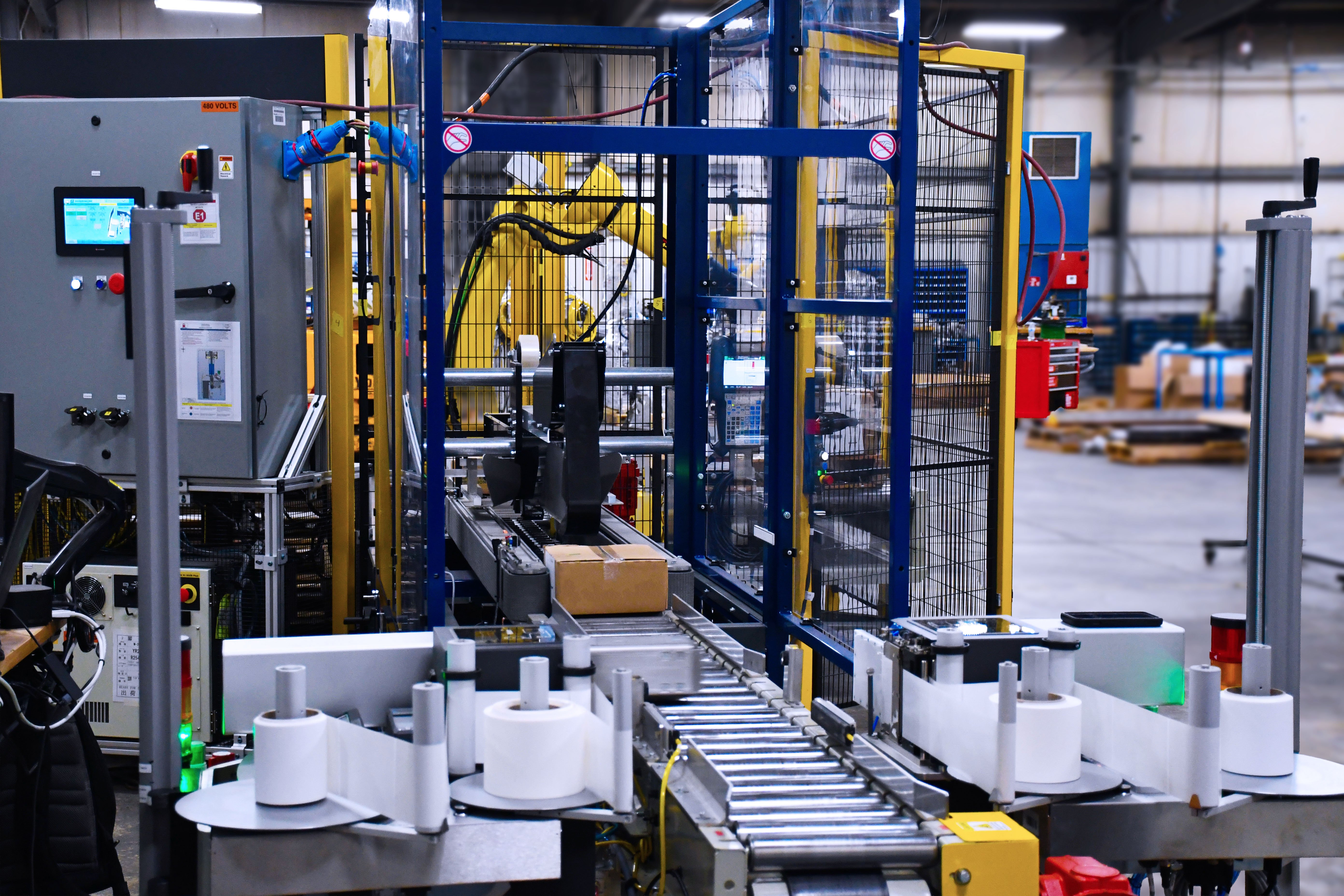
In manufacturing environments where every minute of downtime translates directly to lost revenue, robotic automation has become essential infrastructure. These sophisticated systems deliver the precision, speed, and consistency that modern production demands require—but only when they’re operating at peak performance.
Here’s the reality that every manufacturer with robotic automation must face: unplanned downtime isn’t just inconvenient—it’s catastrophic. A single robot failure can halt entire production lines, miss critical customer commitments, and generate costs that quickly spiral into six figures.
The difference between manufacturers who maximize their automation ROI and those who struggle with chronic reliability issues often comes down to one critical factor: preventative maintenance.
At Integrion Automation’s Field Service division, we’ve seen this pattern repeatedly across hundreds of facilities. The manufacturers who implement rigorous preventative maintenance programs achieve dramatically higher uptime, longer equipment life, and better overall returns on their automation investments.
Here’s why preventative maintenance isn’t optional—it’s the foundation of reliable robotic automation.
Modern robotic systems are remarkably reliable when properly maintained. FANUC robots, for example, have a mean-time-between-failure (MTBF) rate of 78,000 hours under optimal conditions—that’s nearly nine years of continuous operation.
But here’s the critical caveat: this exceptional reliability is entirely dependent on adherence to preventative maintenance protocols.
According to FANUC Robotics’ guidelines, industrial robots require planned preventative maintenance every 3,850 hours or annually, whichever comes first. This isn’t a suggestion—it’s the threshold that determines whether your equipment delivers its designed reliability or becomes a source of chronic production disruptions.
When manufacturers defer or skip preventative maintenance, the consequences are predictable and expensive:
Accelerated Wear
Components that should last years deteriorate in months, requiring premature replacement at significantly higher cost.
Precision Degradation
Robots gradually lose accuracy, leading to quality issues, increased scrap rates, and customer complaints.
Unexpected Failures
Minor issues that could have been addressed during scheduled maintenance escalate into catastrophic failures requiring emergency repairs.
Extended Downtime
Unplanned failures take longer to diagnose and repair than scheduled maintenance, multiplying production losses.
Safety Risks
Degraded equipment performance increases the risk of accidents, particularly in collaborative applications where robots work alongside people.
The pattern is clear: deferring preventative maintenance doesn’t save money—it multiplies costs while undermining the reliability that justified the automation investment in the first place.
To understand why preventative maintenance is non-negotiable, you need to understand the real cost of robotic system downtime.
When a robot goes down, production stops immediately. For a facility running three shifts with a production value of $10,000 per hour, a 24-hour emergency repair costs $240,000 in lost production alone.
Emergency repairs cost significantly more than scheduled maintenance: - Overtime labor rates for technicians - Expedited shipping for replacement parts - Potential equipment rental to maintain production - Travel costs for specialized support
The costs extend beyond the immediate production line: - Missed customer delivery commitments - Penalty clauses in supply agreements - Rush shipping costs to recover schedules - Overtime for workers catching up on delayed production - Potential loss of future business from reliability concerns
While dealing with equipment failures, your team isn’t: - Pursuing new business opportunities - Implementing process improvements - Training on new capabilities - Planning strategic initiatives
When you calculate the total cost of unplanned downtime, the investment in preventative maintenance becomes obviously justified. Scheduled maintenance costs a fraction of emergency repairs while preventing the production losses that dwarf both.
Robotic automation systems represent substantial capital investments—often $200,000 to $500,000+ per cell. Preventative maintenance is the strategy that protects this investment and maximizes its return.
Properly maintained robotic systems can operate reliably for 15-20+ years. Without preventative maintenance, the same equipment may require major rebuilds or replacement in 7-10 years.
The difference: - With preventative maintenance: 20 years of productive operation - Without preventative maintenance: 8 years before major investment required
Over a 20-year period, this difference can represent millions in avoided capital expenditure.
Robotic systems are often specified for applications requiring micron-level precision. As components wear, this precision degrades—leading to quality issues that may not be immediately obvious but accumulate over time.
Preventative maintenance ensures: - Consistent part positioning and manipulation - Maintained weld quality in robotic welding applications - Accurate dispensing in adhesive and coating applications - Reliable inspection and measurement in quality control operations
With preventative maintenance, your automation operating costs are predictable and budgetable. You know when maintenance will occur, what it will cost, and can plan accordingly.
Without preventative maintenance, you’re subject to unpredictable emergency repairs that disrupt both production schedules and budgets.
Well-maintained robotic equipment retains significant resale value. If you upgrade or reconfigure your production lines, properly maintained robots can be sold, redeployed, or traded in—recovering a portion of your initial investment.
Neglected equipment has minimal resale value and may even incur disposal costs.
In environments where robots operate near human workers—particularly with collaborative robots designed for direct human interaction—safety is paramount.
Preventative maintenance directly contributes to workplace safety by:
Ensuring Safety Systems Function Properly
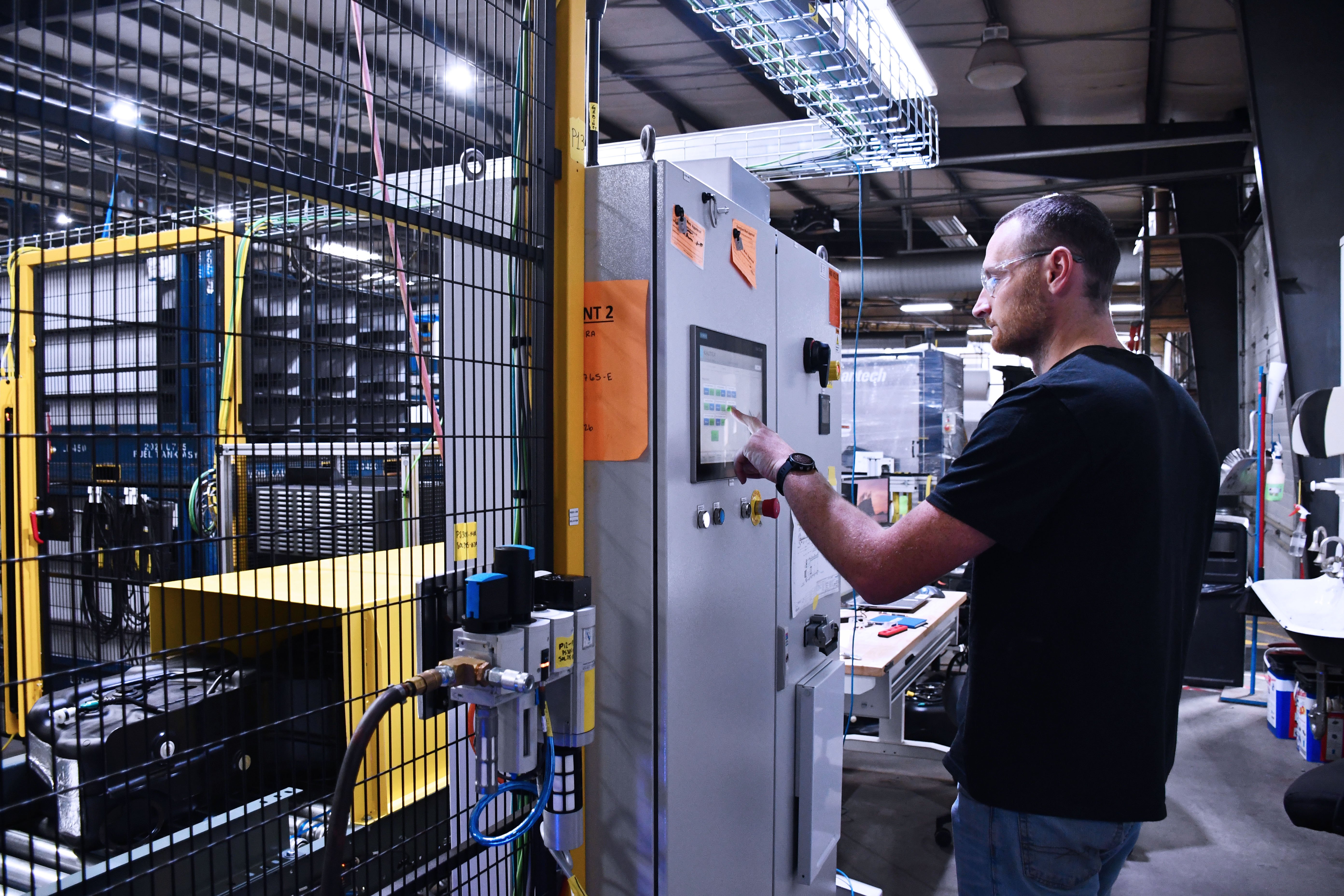
Regular testing confirms that emergency stops, safety interlocks, and protective systems operate as designed.
Preventing Unexpected Movements
Worn components can cause erratic robot behavior. Preventative maintenance identifies and replaces these components before they create hazards.
Maintaining Force Limiting
Collaborative robots rely on force sensing to operate safely near humans. Calibration drift can compromise this safety feature.
Verifying Proper Operation
Comprehensive inspections confirm that robots operate within their designed parameters, reducing accident risk.
The cost of a workplace accident—in human terms, regulatory consequences, and financial impact—far exceeds any preventative maintenance investment.
In applications where precision is non-negotiable—automotive assembly, pharmaceutical manufacturing, electronics production, medical device assembly—preventative maintenance becomes even more critical.
These applications demand: - Repeatable positioning within tight tolerances - Consistent force application for assembly operations - Reliable motion profiles for quality welding, dispensing, or coating - Accurate vision system calibration for inspection and guidance
Like a precision instrument, robotic systems require regular calibration and maintenance to sustain this level of performance. Deferred maintenance leads to gradual precision degradation that may not trigger obvious failures but steadily undermines product quality.
By the time quality issues become apparent, you may have produced thousands of parts with subtle defects—creating potential recall exposure and customer relationship damage far exceeding any maintenance cost.
When manufacturers calculate the ROI of preventative maintenance, the numbers are compelling:
Annual Preventative Maintenance Investment: $8,000 - $15,000 per robot
Avoided Emergency Repair (single incident): $25,000 - $75,000
Avoided Production Loss (24-hour downtime): $100,000 - $500,000+
Extended Equipment Life: 5-10 additional years of productive operation
Even a single avoided emergency repair typically pays for multiple years of preventative maintenance. When you factor in avoided downtime and extended equipment life, the ROI becomes overwhelming.
Beyond the direct cost savings and reliability improvements, preventative maintenance delivers something equally valuable: predictability.
With scheduled maintenance programs: - You know when maintenance will occur and can plan production accordingly - Downtime is minimal and scheduled during low-impact periods - Parts are ordered in advance, avoiding expedited shipping costs - Technicians are scheduled efficiently rather than responding to emergencies - Budgets are predictable rather than subject to emergency repair spikes
This predictability allows better planning, resource allocation, and operational efficiency throughout your organization.
Some manufacturers view preventative maintenance as insurance they hope never to need—an expense that doesn’t deliver immediate visible value.
This perspective is backwards.
Preventative maintenance is insurance you want to use. Every scheduled maintenance visit that identifies and corrects a developing issue is a prevented failure, avoided downtime, and protected investment.
The goal isn’t to avoid using your maintenance program—it’s to use it proactively so you never experience the catastrophic costs of reactive emergency repairs.
For manufacturers committed to maximizing their automation ROI, preventative maintenance must be non-negotiable:
✅ Schedule maintenance at recommended intervals (3,850 hours or annually for most industrial robots)
✅ Budget for maintenance as an operating cost, not a discretionary expense
✅ Track maintenance history to identify patterns and optimize schedules
✅ Partner with qualified service providers who understand your specific equipment
✅ Train internal teams on basic maintenance and troubleshooting
✅ Maintain critical spare parts inventory to minimize repair downtime
Preventative maintenance isn’t overhead—it’s the foundation of reliable, productive automation that delivers the ROI that justified your investment.
If your robotic systems aren’t on a rigorous preventative maintenance schedule, every day of operation increases your risk of costly failures and production disruptions.
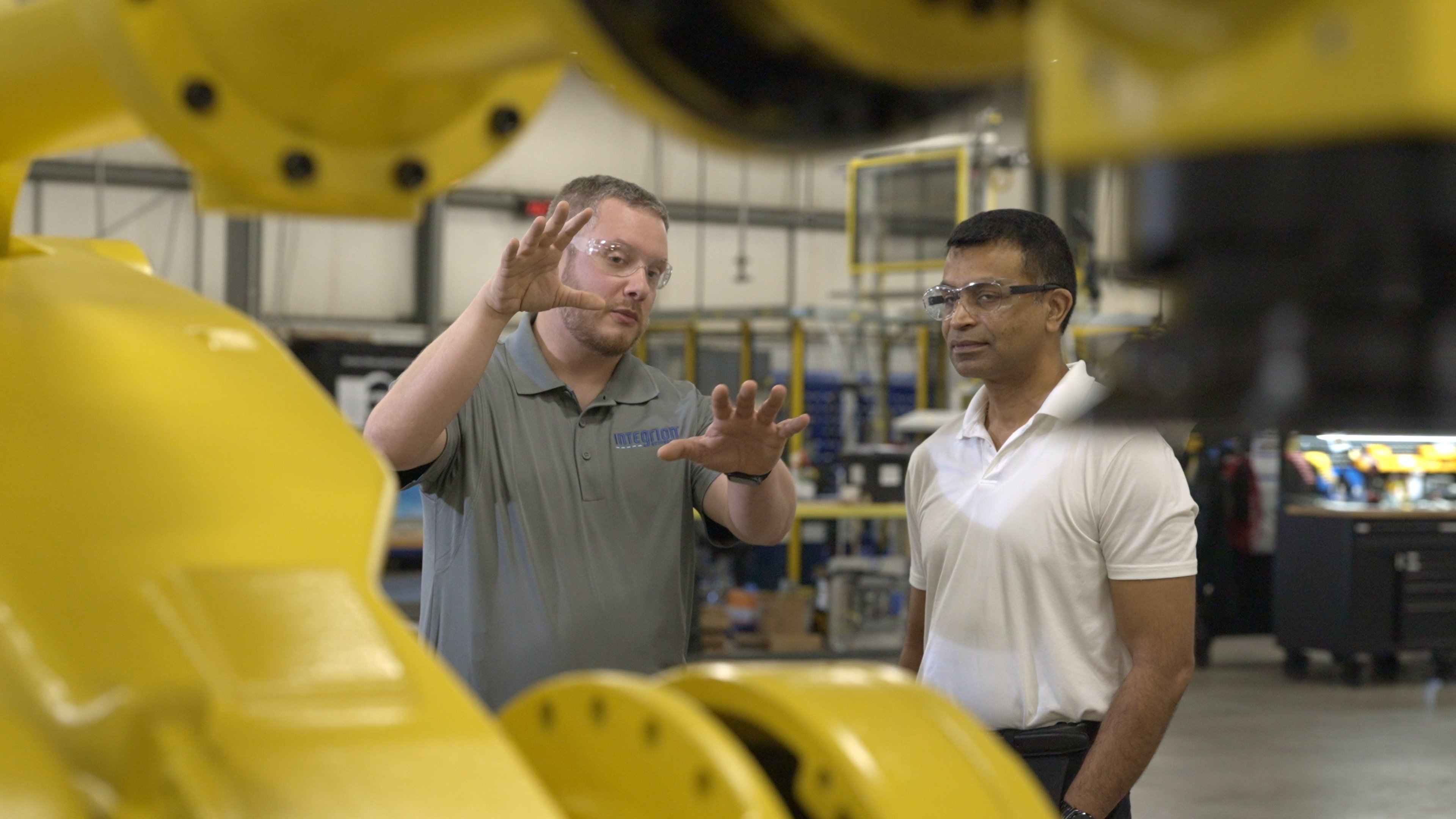
At Integrion Automation’s Field Service division, we provide comprehensive preventative maintenance programs for robotic automation systems across all major brands and applications. Our team brings decades of experience maintaining systems we’ve integrated—and systems installed by others.
👉 Contact our Field Service team to discuss preventative maintenance programs that protect your automation investment and maximize uptime.
About Integrion Automation Field Service
Integrion Automation’s Field Service division provides comprehensive lifecycle support for robotic automation systems, including preventative maintenance, emergency repair, system upgrades, and operator training. With expertise across all major robot brands and applications, we help manufacturers maximize uptime, extend equipment life, and protect their automation investments.