Automation Solutions

In modern manufacturing, precision isn’t optional, it’s the baseline expectation. Products must be positioned accurately, inspected thoroughly, and tracked completely throughout production. Manual processes and mechanical fixturing can’t consistently deliver the speed, accuracy, and flexibility of today’s manufacturing demands.
This is where machine vision changes everything.
Machine vision technology has evolved from a specialized capability reserved for high-end applications to an essential component of competitive manufacturing automation. By giving automated systems the ability to “see” and interpret their environment, machine vision enables levels of precision, quality control, and operational flexibility that were impossible just a decade ago.
At Integrion Automation, we integrate machine vision systems into many of our automation solutions—and for good reason. This technology doesn’t just improve efficiency; it fundamentally transforms what’s possible in automated manufacturing.
Here’s what you need to know about machine vision, how it works, and why it’s become indispensable for manufacturers pursuing operational excellence.
Machine vision uses cameras, lighting, and image processing software to capture, analyze, and interpret visual information in real time. In manufacturing automation, vision systems perform tasks that traditionally require human eyes and judgment—but with greater speed, consistency, and accuracy.
Rather than relying on mechanical guides, fixtures, or manual positioning, vision-equipped automation systems can:
This capability transforms automation from rigid, position-dependent systems to flexible, intelligent solutions that adapt to real-world production conditions.
Understanding the impact of machine vision requires looking at how manufacturing automation worked before this technology became accessible.
Traditional automated systems relied heavily on mechanical methods to control part position and orientation:
These approaches worked, but they had significant limitations:
Machine vision eliminates most of these constraints. Instead of forcing parts into exact positions with mechanical guides, vision systems locate parts wherever they are and guide automation to adapt accordingly.
The result:
This shift from rigid mechanical systems to intelligent, adaptive automation is one of the most significant advances in modern manufacturing.
Machine vision delivers measurable improvements across multiple dimensions of manufacturing performance:
Human inspectors are subject to fatigue, distraction, and variability. Machine vision systems deliver consistent, repeatable performance regardless of production volume or shift duration.
Vision systems can: - Detect defects as small as a few microns - Measure dimensions with precision that exceeds human capability - Inspect 100% of parts at production speed, not just samples - Apply consistent standards without variation or interpretation
By eliminating manual positioning, pre-fixturing, and inspection steps, machine vision dramatically accelerates production cycles.
Vision-guided systems: - Pick and place parts faster than mechanically guided systems - Eliminate bottlenecks caused by manual inspection or positioning - Reduce cycle times by combining multiple operations - Maintain high speeds without sacrificing accuracy
One of machine vision’s most valuable benefits is operational flexibility. Systems that once required hours of mechanical adjustment for product changeovers can now be adapted with simple software updates.
This flexibility enables: - Mixed-product production runs without line reconfiguration - Rapid new product introduction without custom fixturing - Easy accommodation of part variations within the same production run - Lower startup costs when testing new products or designs
Modern manufacturing increasingly demands complete traceability—the ability to track individual components from raw material through final assembly and delivery.
Machine vision enables: - Automated barcode and QR code reading at every production stage - Defect detection and rejection before faulty parts reach downstream operations - Dimensional verification ensuring parts meet specifications - Complete production records linking quality data to specific units
This level of quality control and traceability is particularly critical in regulated industries like pharmaceutical, medical device, automotive, and aerospace manufacturing.
By identifying defects early in the production process, machine vision prevents faulty components from consuming additional processing time, materials, and labor.
Early defect detection: - Reduces scrap and rework costs - Prevents defective components from reaching assembly operations - Minimizes customer returns and warranty claims - Improves overall production yield and profitability
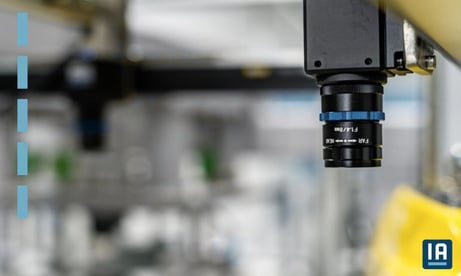
Not all machine vision applications require the same technology. Understanding the differences between 2D and 3D vision systems helps manufacturers select the optimal solution for their specific needs.
2D vision systems use standard cameras to capture flat, two-dimensional images. These systems excel at applications where parts can be identified and measured from a single viewing angle.
Ideal Applications for 2D Vision: - Part identification and location for simple shapes and profiles - Barcode and QR code reading for traceability and tracking - Presence/absence verification confirming components are in place - Edge detection and alignment for positioning and orientation - Surface inspection for defects visible from a single angle
Key Advantages: - Lower cost compared to 3D systems - Faster processing enabling higher throughput - Simpler integration with straightforward setup and programming - Proven reliability with decades of successful applications
Technique Enhancement: By using 2D cameras with specialized lighting—such as backlighting to create silhouettes—vision systems can quickly and accurately identify part outlines and features. Multiple 2D cameras positioned at different angles can also be combined to create pseudo-3D information when full 3D vision isn’t necessary.
3D vision systems add depth perception, capturing the Z-axis (height) dimension in addition to X and Y coordinates. This capability is essential for applications involving complex shapes, stacked parts, or operations requiring precise depth information.
Ideal Applications for 3D Vision: - Complex part recognition with irregular or three-dimensional shapes - Bin picking where parts are randomly oriented and stacked - Volume measurement for packaging and material handling - Surface profiling to detect warping, deformation, or dimensional errors - Robotic guidance for precise manipulation of complex geometries
Key Advantages: - Complete spatial information including height and depth - Superior handling of complex shapes that can’t be characterized from a single angle - Improved accuracy for applications requiring precise 3D positioning - Advanced inspection capabilities detecting defects not visible in 2D
Cost Considerations: 3D vision systems have historically been significantly more expensive than 2D alternatives. However, camera technology has advanced rapidly over the past decade, and costs have decreased substantially. Today, high-quality 3D vision is accessible for a much wider range of applications than ever before.
The decision between 2D and 3D vision depends on your specific application requirements:
Implementing machine vision in production environments presents challenges that go beyond selecting cameras and software. Real-world manufacturing conditions can interfere with vision system performance—but innovative solutions can overcome these obstacles.
Production environments often have inconsistent lighting from windows, overhead fixtures, or adjacent workstations. These variations can interfere with camera readings and reduce accuracy.
Solution: Infrared Lighting Integration
At Integrion Automation, we’ve developed innovative approaches to lighting challenges, including infrared illumination systems that operate outside the visible light spectrum. By using infrared light sources with cameras sensitive to those wavelengths, we eliminate interference from ambient lighting conditions—ensuring consistent, accurate readings regardless of external light sources.
This approach is particularly valuable in: - Facilities with natural lighting that varies throughout the day - Production lines near windows or skylights - Environments where adjacent processes create variable lighting - Applications requiring extremely consistent imaging conditions
Different materials, surface finishes, and colors can affect how parts appear to vision systems. Reflective surfaces, transparent materials, and dark colors can be particularly challenging.
Solution: Specialized Lighting and Filtering
By carefully selecting lighting angles, wavelengths, and polarization, vision systems can be optimized for specific part characteristics: - Diffuse lighting for reflective surfaces - Structured light for transparent or translucent materials - Polarized lighting to reduce glare and highlights - Multi-spectral imaging to detect features invisible under standard lighting
Machine vision’s versatility makes it valuable across virtually every manufacturing sector. Here’s how different industries leverage this technology:
Automotive Manufacturing - Weld inspection and verification - Component presence detection in assemblies - Dimensional measurement of precision parts - Barcode reading for traceability
Electronics and Consumer Products - PCB inspection and component verification - Label and marking verification - Package integrity inspection - Small part handling and assembly
Pharmaceutical and Medical Devices - 100% product inspection for defects - Serialization and track-and-trace compliance - Sterile packaging verification - Dimensional verification of critical components
Food and Beverage - Package inspection and seal verification - Label presence and orientation checking - Fill level verification - Foreign object detection
Industrial Components - Dimensional measurement and verification - Surface defect detection - Assembly verification - Part sorting and classification
Machine vision technology continues to evolve rapidly. Emerging capabilities include:
Artificial Intelligence and Deep Learning Modern vision systems increasingly incorporate AI algorithms that can learn to recognize patterns, defects, and anomalies without explicit programming—improving over time as they process more data.
Hyperspectral Imaging Advanced cameras that capture information across multiple wavelengths, revealing material properties and defects invisible to standard vision systems.
3D Scanning and Metrology High-resolution 3D scanning for complete part characterization and dimensional verification at speeds approaching real-time production rates.
Edge Computing Integration Vision processing performed directly on cameras or nearby edge devices, reducing latency and enabling faster decision-making in high-speed applications.
These advances will continue expanding what’s possible with vision-guided automation, enabling even more sophisticated inspection, measurement, and control capabilities.
While machine vision technology has become more accessible, successful implementation still requires deep expertise in optics, lighting, image processing, and integration with automation systems.
Critical considerations include:
At Integrion Automation, machine vision is a core capability we integrate into the majority of our automation solutions. As a FANUC Certified Vision Specialist and experienced integrator across multiple vision platforms, we bring the expertise needed to design, implement, and optimize vision systems that deliver measurable results.
Machine vision has evolved from a specialized technology to an essential capability for competitive manufacturing. Whether you’re looking to improve quality control, increase flexibility, enhance traceability, or reduce labor requirements, vision-guided automation delivers measurable value.
The question isn’t whether machine vision can benefit your operations—it’s how quickly you can implement it to gain competitive advantage.
👉 Contact our team to discuss how machine vision can transform your manufacturing automation and deliver the precision, quality, and flexibility your operations demand.
About Integrion Automation
Integrion Automation designs, engineers, and integrates custom automation solutions featuring advanced machine vision capabilities. As a FANUC Certified Vision Specialist with expertise across multiple vision platforms, we help manufacturers leverage 2D and 3D vision technology to achieve superior quality, efficiency, and operational flexibility.